My Family Mocked My Quiet Farm Life and Removed Me From Their Group Chat—A Week Later, They Arrived With Suitcases and Found My Gate Locked
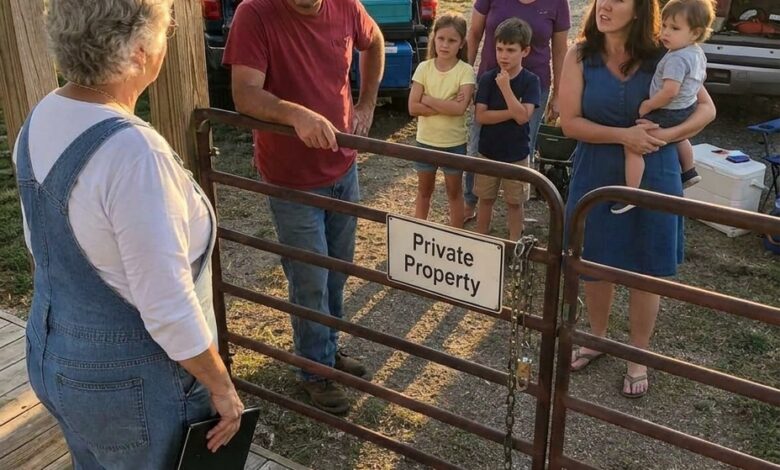
I eventually opened the gate—but not because the boundary had failed. Children were tired, darkness was approaching, and Clara had done the one thing I had been waiting years for someone to do: she asked. That evening Daniel apologized for removing me from the chat and, more importantly, for describing me as though I were not a working adult. I explained that the notebook was not an invoice and I had no intention of demanding retroactive payment; the financial accounting existed to make invisible labor visible. Going forward, visits would be arranged rather than announced, equipment would require permission, guests would contribute through groceries, supplies or actual farm work, and nobody would assume that my time had no value simply because no bill had previously accompanied it. The following morning Daniel and my nephew spent four hours repairing sections of the barn gutters while my eleven-year-old granddaughter Ellie appeared at six o’clock in a barn coat because she had promised to help collect eggs. By noon Daniel climbed down from the ladder, dirty and exhausted, and told me his apology had changed overnight. At the gate he had been sorry for the embarrassment; after four hours doing work I routinely handled alone, he was sorry for the years. “I should have been filling out that contribution line my whole life,” he admitted. I thanked him, because I did not need humiliation or repayment from my children. I needed recognition followed by different behavior.
That night we ate on the porch beneath the white-oak rail Earl had built with his own hands in 1987, when I was eight months pregnant with Daniel. Earl had stained it twice, sealed it once and stepped back thirty-six years earlier with the quiet satisfaction of a man who understood good work. That’ll last, he had said, and it had. After everyone went to bed, I rested my hand on that old rail and thought about everything else a family assumes will last simply because somebody keeps maintaining it—farms, homes, traditions, marriages, relationships, even the patience of the person who always makes things easier. I had spent years believing love meant keeping the refrigerator full, the beds ready and the gate open, hoping eventually someone would notice what keeping all of it open required. The locked gate had accomplished what years of accommodation never had: it made my family stop before entering and recognize that there was a person on the other side. In the morning Ellie would be waiting to collect eggs, Daniel would check the gutters he had repaired, and eventually somebody would fill out that little form before another visit. The farm was still a place where my family could gather. The difference was that now, before they arrived, they understood they had to knock.