My Family Mocked My Quiet Farm Life and Removed Me From Their Group Chat—A Week Later, They Arrived With Suitcases and Found My Gate Locked
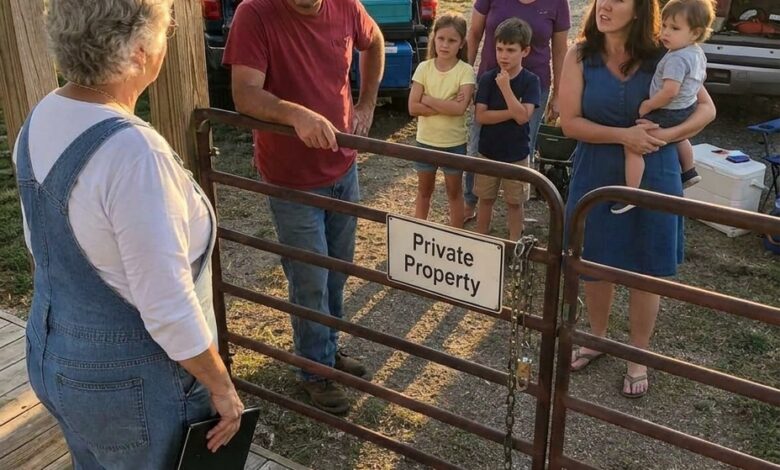
“The gate’s locked.” My son Daniel’s voice came through my phone while I sat thirty yards away on the porch, watching twelve members of my family stand beside two SUVs, two trucks, a mountain of suitcases and enough coolers for an entire Labor Day weekend. I could see him lift the flowerpot where, for years, I had obediently left a spare key whenever they decided to use my Maryland farm as their private retreat. This time there was no key—only a heavy chain across the gate and a new sign reading PRIVATE PROPERTY: NO ENTRY WITHOUT INVITATION. “Mom, we’re here,” Daniel said, as though my failure to open the gate must be some misunderstanding. “I can see that,” I answered. When he demanded that I not “do this in front of everybody,” I pointed him toward the clear plastic box attached to the fence post. Inside was the black notebook my family had laughed about for seven years—and by the time they finished reading what I had written in it, nobody was laughing anymore.
My name is Ruth, and the 112-acre farm in Garrett County had been the center of my life long before anyone began calling it “our little escape.” My husband Earl and I had raised Daniel and our daughter Clara there, and when Earl died of a heart attack eleven years earlier, the farm became entirely my responsibility: property taxes, agricultural paperwork, insurance, equipment maintenance, feed contracts, fences, twenty-three chickens, a kitchen garden and a back field leased for hay. At first, the family visits after Earl’s death were comforting. Gradually, invitations became assumptions. I washed sheets, stocked refrigerators, prepared meals, cleaned firepits and repaired whatever was damaged after everyone drove away. In 2016 I began documenting those costs in the same notebook I used for farm operations: $230 in groceries during one Labor Day weekend, a bent bush-hog blade after someone borrowed the tractor, a broken gate latch, missing tools, depleted propane, damaged linens and countless hours of preparation and cleanup. My relatives joked about “Mom’s little farm diary,” never realizing the woman they treated like a retired hostess was keeping the same kind of records that had helped her operate a working farm for decades. Then, that August, my niece accidentally mentioned plans for another Labor Day gathering—and I discovered I had been removed from the family group chat organizing it. When I called Daniel, he explained why: “Mom, it was for working adults. You don’t understand what we talk about.”
I did not argue. I fed the chickens, checked the fence and opened my notebook to a fresh page: Removed from family group chat. Daniel, organizing Labor Day weekend visit. Then I calculated seven years of hospitality—the groceries, utilities, supplies, repairs and hours of unpaid labor—and wrote something beneath the numbers that mattered more than the total: This farm is my work, my livelihood and my home. It has never been a hotel, campground or free vacation property. If you want to be here, you are welcome to ask. The asking is not a formality. It is respect. I added a simple visit-request form asking for dates, number of guests, meals, equipment use and what contribution visitors intended to make. A week later, Daniel arrived without asking, exactly as I suspected he would. My nephew Marcus opened the box at the locked gate and began reading the notebook while everyone stood around him with their luggage. Then Clara took it, read the figures and handwritten statement, looked across the gravel toward me and said, “Mom, I’m sorry.” Daniel remained silent. For the first time, the family could see in dollars, dates and hours what my quietness had allowed them to pretend was free.