My Son Mocked Our Waiter With Down Syndrome—Then I Told Him About the Friend I Betrayed 20 Years Ago
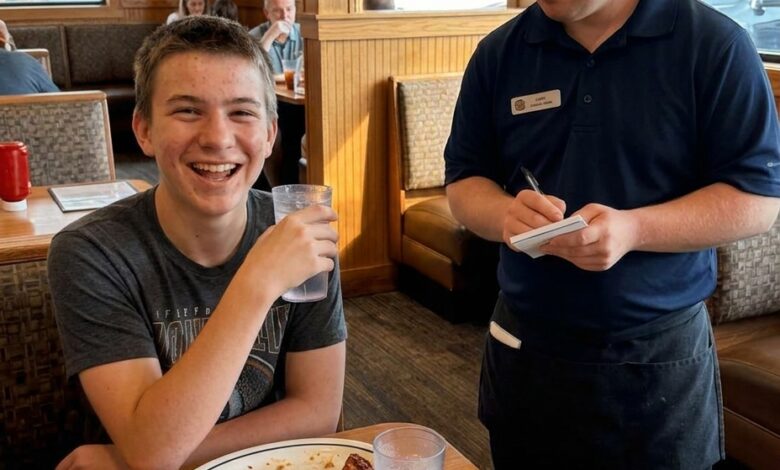
The following afternoon, Leo asked me to take him back to the steakhouse. Sam recognized us immediately, and for a moment I saw uncertainty cross his face before his professional smile returned. Leo walked directly toward him and said he had not come for dinner; he had come to apologize. He admitted that mocking Sam had been cruel, that Sam had done nothing to deserve it, and that he was ashamed of trying to make someone else feel small for working differently than he did. When Sam said it was okay, Leo shook his head and answered, “No. It wasn’t.” Sam studied him for a moment before offering his hand and thanking him for coming back. A few weeks later, Leo asked whether he could spend Saturday mornings volunteering at a recreation program for teenagers and young adults with developmental disabilities. There was no punishment schedule, no forced community-service agreement and no grand parental lecture attached to it. He chose to go. After his first day, he came home exhausted and laughing because everyone had beaten him at basketball and cheered for him anyway.
The wooden box is still in the back of my closet, but I rarely need to open it anymore. For years I had thought of Daniel only through the worst thing I ever did to him, replaying those few seconds in a school parking lot and imagining the apology I never got to give. Telling Leo the story did not undo my mistake, and his apology to Sam could not erase what had happened at the restaurant. What it did was stop one small act of cruelty from becoming something ordinary. My son learned that people remember the way we make them feel long after we have forgotten the joke, and I finally understood that perhaps regret has one useful purpose if we refuse to waste it. Daniel once helped a grieving sixteen-year-old girl feel less alone. Twenty years later, without ever knowing it, he helped her son become a little kinder too.