I Married a Dying Man as His Final Wish — After the Funeral, His Lawyer Revealed Who He Had Always Been
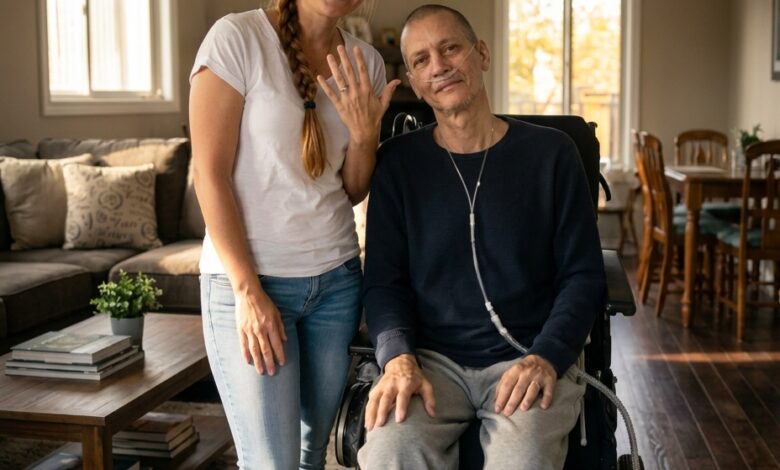
The journal documented one entry for nearly every birthday after I disappeared, beginning when I was fifteen and continuing through adulthood. Carl wrote hopes that I would find safety, laughter, and a home where nobody packed my belongings into bags. He became a history teacher, kept extra lunches for students, and stayed late for children who dreaded returning home, shaping his life around the dignity I had unknowingly offered him. Legally, our marriage made me his surviving spouse, but his estate plan contained no dramatic fortune or hidden property dispute; the true bequest was the journal, the letter, and the novel preserving the leaf. Carl had deliberately concealed our shared past before proposing because he feared I might accept from obligation if I knew how much that childhood moment had meant to him. He wanted my consent to remain free, unburdened by history, illness, or emotional debt. His final entry, written three days after our wedding, said only that he had always hoped I understood ordinary kindness was never ordinary—and that now he knew I did.
Six weeks later, I returned to Silver Oak Street and sat beneath the only familiar thing that remained: the maple tree. The workshop was gone, Arthur’s house had been replaced, and the neighborhood no longer matched the place preserved in memory. I opened Carl’s novel, and the brittle red leaf slipped into my lap after waiting between those pages for most of our lives. I had believed I gave a dying man ten days of belonging, while he had spent decades carrying proof that one unremarkable kindness could alter the direction of a life. Nothing about that afternoon had felt heroic to me, which was precisely why it mattered to him. I left the old leaf beside the tree’s roots and carried the book home. Carl had waited years to thank me for something I never knew I had given, and in the end, he returned it as love.