I Married a Dying Man as His Final Wish — After the Funeral, His Lawyer Revealed Who He Had Always Been
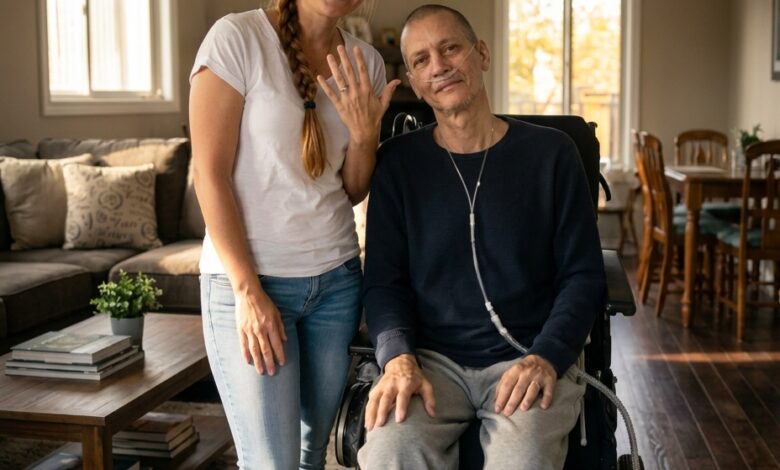
Ten days after marrying Carl in his living room, I stood beside his coffin holding the ring he had been too weak to place on my finger. That evening, rain tapped against my windows when his lawyer arrived carrying a sealed envelope, a worn journal, and a faded novel. Carl had ordered him to wait until after the funeral because he wanted me to grieve the man I knew before discovering the life he had hidden. The first line of his letter made my knees give way: our meeting through the hospice program had not been accidental. Before illness, Scrabble games, and our brief marriage, Carl had been the quiet young man who lived two houses from my childhood home. He remembered me from Silver Oak Street, though I had not recognized him. What I believed was a final act of companionship had begun decades earlier with one afternoon I had completely forgotten.
I met Carl as a hospice volunteer when he was forty and living alone with stage-four cancer. He was thin from treatment but quick with humor, surrounded by books, and determined not to let illness become the largest thing in every room. Over four months, I brought meals, washed dishes, and played fiercely competitive Scrabble while he remembered every small preference I mentioned. When his illness made speech difficult, I distracted him with an absurd story rather than watching him struggle, and something in his expression changed. A week later, he proposed, explaining that every hospital form marked “next of kin” was blank and that he wanted someone holding his hand through his final chapter. I agreed because what I felt was not pity; it was the strange familiarity of finding a room I somehow already knew. Neither of us understood then that the familiarity had a name and a history.
Carl’s letter returned me to the workshop behind his grandfather Arthur’s house, where he repaired bicycles as a shy young man with a severe stutter. One afternoon, after an impatient customer humiliated him, I found him sitting alone near the alley. Rather than offer sympathy, I sat beside him and talked about a troublesome stray kitten until he smiled and walked back inside with me. Soon afterward, my parents died in an accident, I entered foster care, and my old neighborhood disappeared from my life. Carl tried once to contact me, but his letter was returned, and Arthur urged him not to interfere with the new life I was being forced to build. Carl never forgot the afternoon by the workshop or the red maple leaf I placed inside his favorite novel with the joke that he would never lose his page. When he later saw my name on the hospice volunteer list, he asked for me—not to collect gratitude, but to learn what kind of woman that forgotten girl had become.