I Called My Son-in-Law a Freeloader at Easter — A Misdelivered Letter Showed He’d Paid My Insurance for Six Years
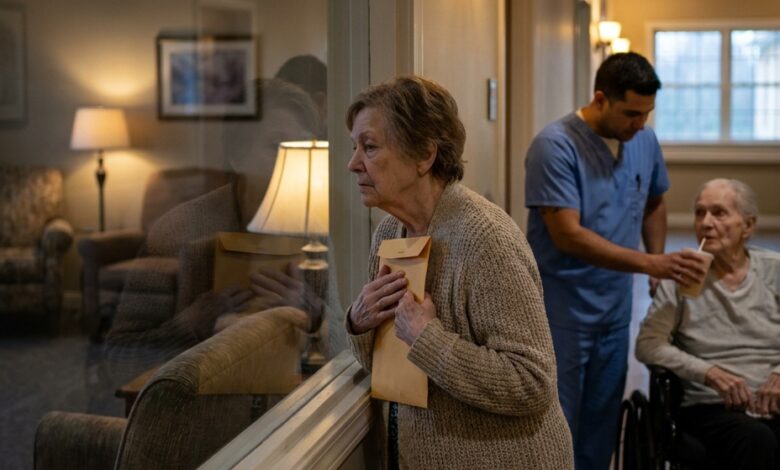
“Is your hip bothering you? You’re standing crooked.” That’s what he said. Not an explanation, not an apology, not a defense — a CNA’s eyes doing a CNA’s sweep of an old woman in a lobby, because caring for people is not something Marco does, it is the operating system he runs on, and I finally, FINALLY saw it, eight years and one insult too late. We sat in the family lounge — he got me the good chair, the one they save for the newly bereaved, and I let him — and I put the letter on the table between us and said, “The last Thursday. What did you promise my husband?” And Marco was quiet for a while, and then he told me. Hal, that Thursday, had two pieces of unfinished business, and he gave them both to the night CNA with the strong hands: “Gail lets mail pile up when she’s sad. There’s an insurance thing, supplemental, she doesn’t even know it exists really — I’ve always handled it. If it lapses she’ll lose the house to a hip or a heart, I’ve seen it happen to better women. Keep it alive until she’s steady. And don’t you ever tell her, because she’ll try to pay you back, and then she’ll be embarrassed, and then she’ll be MAD at you, and son, her mad is a weather system.” (I am reporting my late husband’s words faithfully. The man knew me like a farmer knows sky.) “And the second thing?” I asked. Marco looked at his hands. “He said, ‘Look in on Dana. She’s going to take this hard and she hides it.’ ” He smiled a little. “I over-delivered on the second one.” So there it is, the whole architecture: my husband’s deathbed estate planning consisted of one insurance policy and two human beings, entrusted to a stranger in scrubs, and the stranger executed both instructions for six years with the fidelity of a trust department, asking as his only fee that nobody ever find out. The paperwork of my gratitude took a season: my attorney — who listened to this story and then took off her glasses and cleaned them, which I’ve learned is what lawyers do instead of crying — helped me restructure things properly: the autopay moved back to my account, over Marco’s objection, effective the first of the month; my will was amended to include the son-in-law who’d been carrying me while I graded him; and the $15,400 went back to him whether he liked it or not, in the only currency he couldn’t refuse: paid, in full, to the state university’s nursing program, first and last semesters of the RN degree he’d deferred twice — once when he married Dana, once when the first baby came. The bursar’s office let me put a note on the account. The note says: “From a friend of Hal’s.”
He graduates next spring. He’ll be the oldest one on that stage and, the hospice director tells me — she’s already trying to hire RN-Marco before he exists — the best nurse Fairhaven will ever produce, because you cannot teach what that man does at 3 AM, you can only license it. Easter came around again last month, and I stood up at my own table before the ham, with one glass of wine untouched, and I made the toast I’d been drafting since that night in the lobby. I said: “Last year, in this room, I said some men provide and some men attend. I want to correct the record. Marco Ruiz has provided this family with more than any man at this table, including the ones we’ve buried — and I include my Hal in the count, and Hal would back me, because Hal’s the one who hired him.” My grandson — the one whose fork stopped — stood up and clapped first. Marco refilled the water glasses. Some things don’t change, thank God. So here is my earned wisdom, and it cost me eight years and one unforgivable sentence, so take it free: in every family there is a quiet one being graded on a rubric he’s never seen, by judges who never asked what he does at night. Before you score the quiet ones — ask. Ask what they promised, and to whom, and what it costs them monthly. Because some men provide loudly, and some men provide at 3 AM, on the first of every month, with a note in the file and strong hands and a bad memory for thank-yous — and if you’re very lucky, and very wrong, one of them will still be there when you finally come through the lobby doors to apologize, and the first thing he’ll say… is that you’re standing crooked. Let him get you the good chair, ladies. You’ll have earned the humility, and he’ll have earned everything else.