My Daughter Kept Getting Free Ice Cream From One Truck — Then the Driver Handed Me a Photograph From My Childhood
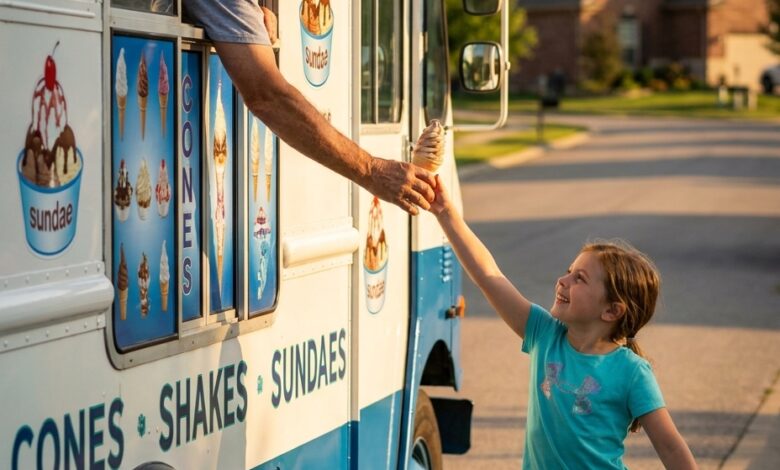
Standing beside the truck, I realized that my suspicion of Ben had been reasonable, but the truth behind his attention was nothing like the danger I had imagined. The photograph was not evidence of something threatening; it was evidence of a promise someone had quietly kept. When Ellie asked whether Uncle Adam had been nice, I discovered something more uncomfortable than anything Ben had said: my daughter barely knew who my brother was because I had repeated my parents’ response to grief. I had protected myself by turning Adam into a name rather than a person. Ben began telling her stories—the way I followed Adam everywhere, how the three of us spent summer afternoons around bicycles and basketballs, and how Adam would buy me another ice cream if I dropped mine. With each detail, memories returned in flashes. From a psychological standpoint, grief does not erase memory neatly; people often avoid reminders because those reminders carry pain, and avoidance can gradually separate us from the good memories surrounding the loss as well. I had spent years believing I was protecting myself from Adam’s death when, without realizing it, I had also been distancing myself from his life.
Ben insisted I keep the photograph. That evening, Ellie and I sat on our front steps with two strawberry shortcake bars while the truck’s tinny music disappeared down the street. She asked about Adam again, and this time I told her everything I could remember—the bicycle lessons, the music from his bedroom, the scraped knees, the brother who acted irritated whenever I followed him but never actually told me to go away. When she asked why I had never told her those stories before, I gave her the simplest answer I had: remembering him used to hurt too much. It still hurt, but the pain no longer seemed like proof that the memories should stay buried. The faded photograph rested beside me, my mother’s five words still visible on the back after more than thirty years. I had thought the past was something that disappeared once enough time had passed. Instead, one summer evening, it came down my street playing ice-cream-truck music and handed a piece of my brother back to me.