My Brother Said I Wasn’t “Close Family” Enough for His Wedding—So I Sold the $770,000 House I Had Given Him
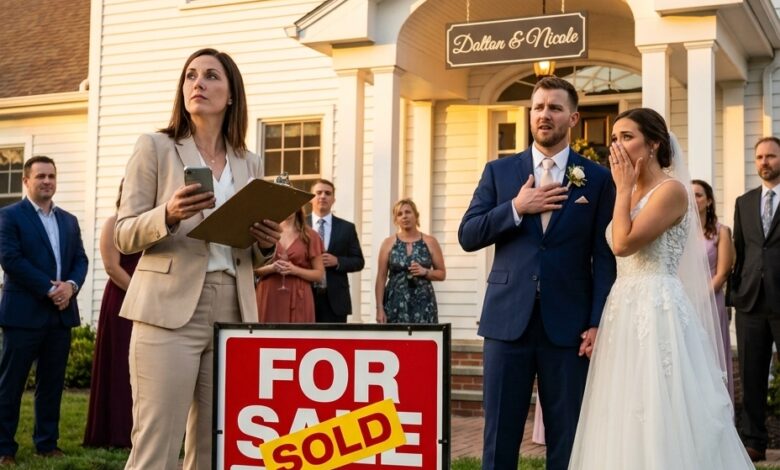
The word SOLD stood in bold letters outside the house when Dalton and his new wife returned from their wedding, still dressed for the celebration and surrounded by guests who had expected the night to continue inside. Nicole stopped in the driveway so abruptly that the relatives behind her nearly walked into her, while Dalton stared at the sign as though his mind could not make sense of what he was seeing. Only hours earlier, they had exchanged vows, toasted their future and celebrated with the very people they considered their “closest family.” I had not been among them. After everything I had done for my brother—including allowing him to build his future around a house worth roughly $770,000—Dalton had laughed when explaining why I was excluded: “It’s only for the closest family.” Now he finally noticed me standing nearby. “Sierra,” he demanded, his face draining of color, “what did you do?” I looked at the house and answered with four words: “I sold my house.”
The property had once represented everything I believed family was supposed to mean. I had given Dalton access to it because I wanted my brother to begin married life with security most young couples spend decades trying to achieve, never imagining that my generosity would eventually be treated as an entitlement. As the wedding approached, however, Dalton and Nicole increasingly behaved as though the home had simply become theirs, while my own place in their lives seemed to shrink. Then came the exclusion that made everything painfully clear. My parents supported the decision that I would not attend, and Dalton’s explanation—that the wedding was reserved for the people closest to them—turned what might have been an ordinary family disagreement into something far more revealing. He was comfortable celebrating his marriage beneath a roof I had provided while simultaneously telling me I did not qualify as close family. Nicole worried about appearances, relatives and how embarrassing any conflict would be for her side of the family, but no one seemed particularly concerned about the humiliation being handed to me. I finally understood that the real issue was not whether I received an invitation; it was whether people could continue accepting something enormous from me while treating the person who provided it as invisible.
Once that realization settled in, I stopped arguing. I sat at my computer, contacted Mark, the real-estate agent I had trusted for years, and told him I wanted the property sold as quickly as reasonably possible. Because the house remained legally mine, I controlled the disposition of the property, and I was no longer willing to let an informal family arrangement be mistaken for permanent ownership. Mark moved quickly: the necessary documents were prepared, signatures completed and offers considered while Dalton and Nicole continued planning their wedding under the assumption that the house would remain the foundation of their married life. I said nothing to interrupt that assumption. By the time their wedding day arrived, the transaction had closed and ownership had passed to someone else. Dalton had thought my generosity was permanent even after deciding our relationship was optional. What he had failed to understand was that those two assumptions depended on each other.