My Mother-in-Law Called the Police When I Refused to Let Her Move In—Then the Officer Asked My Husband One Question
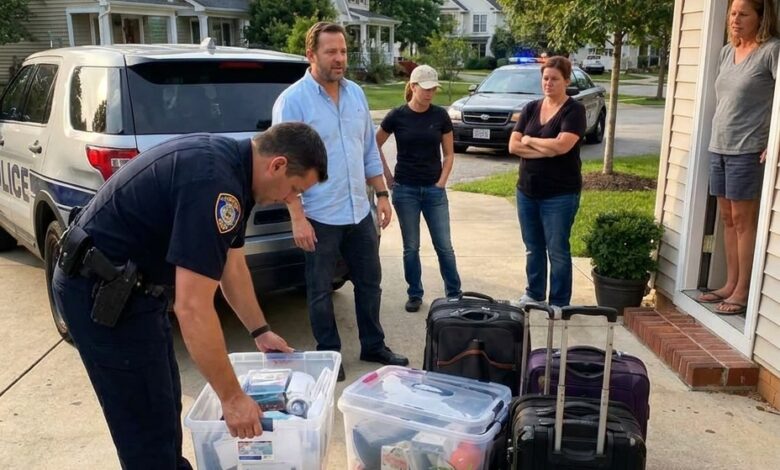
At 5:11 on a Thursday afternoon, I watched my mother-in-law climb out of an SUV carrying enough luggage to make one thing unmistakable: Diane had not come to visit. Three rolling suitcases, storage bins, a garment bag and, inexplicably, a peace lily were packed behind her, while my sister-in-law Lisa stood beside the car holding another bin. Less than an hour earlier, my husband Mark had texted me four words that turned my stomach cold: Mom’s moving in. It’s already decided. He had apparently selected my home office as her bedroom without asking me, then stopped answering when I called to object. When Diane reached my porch, she smiled and asked, “Which room did Mark clear out?” I told her she was welcome inside as a guest, but her luggage was staying outside because she was not moving into my home that afternoon. Diane’s smile disappeared, Lisa pulled out her phone, and within minutes my seventy-four-year-old mother-in-law was calling 911 to report that I had locked her out of her son’s house.
There was one problem with that description: Mark did not own the house. I did. I had purchased the four-bedroom colonial on Alderwood Drive in 2011, two years before meeting him and three years before our wedding, using a down payment I had saved during six years of work as a supply-chain analyst. The deed, mortgage, property-tax records and homeowner’s insurance were all in my name; Mark had never been added to the title. Yet during nine years of marriage, Diane routinely spoke about how fortunate I was that her son “provided so well,” and I had dismissed those comments as the old-fashioned worldview of a woman fiercely proud of her only son. What I had failed to notice was that Mark never corrected her. At 5:34, his car pulled into the driveway almost simultaneously with Officer Ruiz’s cruiser. Diane immediately explained that her daughter-in-law was preventing her from entering her son’s property. The officer asked whether she already lived there. No. Did she receive mail there? No. Had the homeowner agreed to let her move in? Mark had, she insisted. Then Officer Ruiz turned toward my husband and asked the simplest question anyone had asked all afternoon: “Sir, do you own this property?”
Mark looked at me, then at his mother, then back at the officer. Instead of answering, he said, “Claire, can we please stop embarrassing everybody?” That sentence changed the argument for me. He was not correcting a misunderstanding or acknowledging that he had promised away space he had no authority to promise; he was asking me to make the truth less uncomfortable for him. Officer Ruiz repeated the question. Mark finally muttered that ownership was “complicated,” and I answered for him: I had bought the house before we met, my name alone was on the deed and mortgage, and I had received his text announcing Diane’s move only forty-five minutes before she arrived. The officer calmly explained that a spouse promising accommodation did not by itself create a right for another person to occupy privately owned property, and that the homeowner could decide who moved in. After the cruiser left, Diane removed her sunglasses and stared at her son. “You told me this was your house.” Mark immediately protested that he had never actually said that. Diane’s answer landed harder than anything I could have said: “You never said it wasn’t.” For nine years, Mark had allowed his mother to praise him for a version of our financial life that simply was not true—and suddenly the dispute was no longer about where Diane would sleep.