I Drove Eight Hours Through a Snowstorm to Surprise My Family — Then I Heard My Sister Say She Hoped I’d Crash
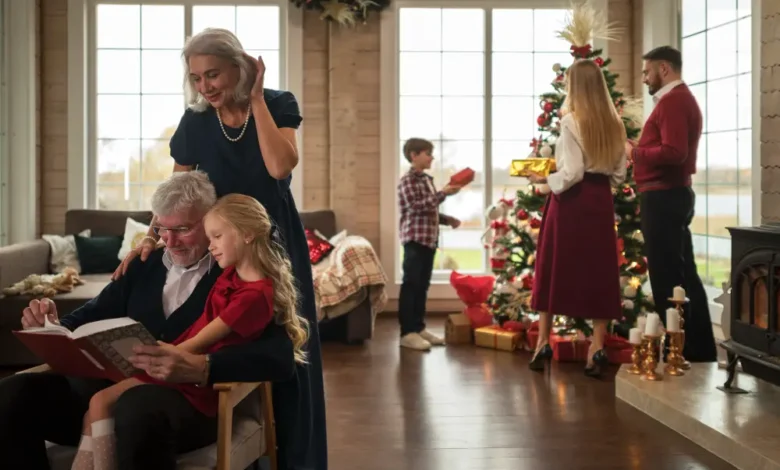
I was standing on my parents’ front path with Christmas gifts stacked against my chest when I heard my sister say she hoped I had crashed my car. Snow clung to my boots, my shoulders ached from eight hours of tense driving, and warm yellow light spilled through the windows of the house where I had grown up. I had not knocked yet. Through the door, Fallon was complaining that I would arrive with expensive presents and make everyone talk about my successful career, my apartment, and my life. Then she laughed and said that if I died on the terrible roads, at least my money would come to the family. Someone else laughed. My mother told her not to say things like that, but she was laughing too. I stood there long enough to make sure I had not misunderstood a single word, then carried every gift back to my car and drove away.
For most of my adult life, I had explained the distance between us as geography and personality. I was thirty-five, a software engineer with a paid-off apartment, steady savings, and a life built around quiet routines rather than crowded gatherings. My parents were relentlessly social, and Christmas at their house usually meant thirty relatives, intrusive questions, and my younger sister Fallon moving comfortably through a kind of noise that exhausted me. Four years earlier, I had stopped attending in person and replaced myself with couriered gifts and short video calls. Every December my mother sent me a list: this year it included a $270 skincare set, a professional drill for my father, and a $350 designer handbag for Fallon. I bought everything, as I always did. But for reasons I did not fully understand at the time, I told my mother I wanted to come home myself. Her reaction had been strangely hesitant. Still, I wrapped the presents, added a few thoughtful extras, watched a major snowstorm close roads across the region, and drove anyway because I wanted to see the real faces waiting for me rather than the ones arranged for a video call.
I spent Christmas Eve alone in a highway hotel forty minutes away and let my family believe I had never arrived. By morning, the calls began multiplying—first my mother and father, then Fallon repeatedly asking whether I was stranded somewhere. I drove the eight hours back to my own apartment before responding. When I finally called my mother, I told her plainly that I had reached the house, had been approaching the door, and had heard Fallon’s comment. My mother immediately said she had not meant it. Then I told her I had heard her laugh. The silence on the other end changed. I did not shout, demand an explanation, or debate whether it had technically been a joke. I simply told her that I needed time to decide what kind of relationship I wanted with people whose reaction to my possible death had been tied to what I might leave behind. Fallon sent messages insisting I had misunderstood the context. My father’s response was different. He apologized without qualification, admitted the family had never done much to make room for the way I actually experienced holidays, and asked to maintain a relationship with me directly rather than through my mother. For the first time, I began separating “family” into individual relationships instead of treating it as one unavoidable structure.