I Married the Man Who Helped Me Heal — Then a Letter in His Tuxedo Revealed Who He Really Was
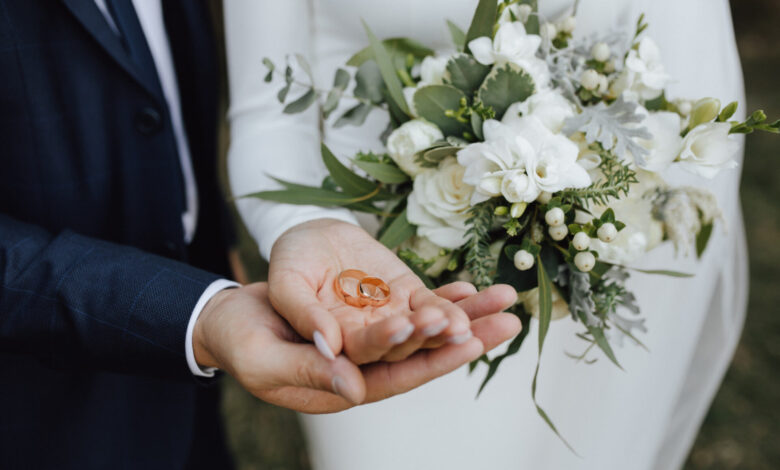
“If you knew what I really did, you wouldn’t be wearing that ring.” Richard’s voice was barely louder than the river moving beyond the terrace, but the words cut cleanly through the music and laughter spilling from our wedding reception behind us. Candlelight flickered against the old mill windows, and somewhere inside, people were dancing beneath strings of warm lights while my new husband stood before me with a half-empty glass trembling in his hand. His face had changed; the tenderness I had seen at the altar was gone, replaced by the same strange, haunted expression I remembered from the hospital months earlier. I asked him to tell me what he meant, but fear and alcohol seemed to overtake him at once, and within minutes he had collapsed into a sleep so deep one of his groomsmen had to help me get him upstairs. I spent the first hour of my wedding night still wearing my dress, lying beside him in darkness and listening to his breathing while those words repeated in my head. At dawn, while gathering his clothes from the floor, I lifted his tuxedo jacket and felt something heavy move inside the pocket. I reached in and found a thick manila envelope with two handwritten words on the front: “For Claire.”
A year earlier, I had been twenty-nine, working as a graphic designer in Hartford and living the kind of ordinary life that seems permanent until something breaks it open. On an October evening, another vehicle crossed the center line on Route 7 and struck the driver’s side of my car. I woke after fourteen hours unconscious with a fractured tibia, stitches across my forehead, and retrograde memory loss that erased the accident itself and blurred parts of the weeks leading up to it. Police initially told me the other driver had died. During my recovery, Richard was a nurse on the hospital floor—not my primary nurse, but one who seemed to appear in my doorway more often than coincidence required. He was quiet, observant, and unusually attentive, and when I once asked if he knew anything about what I had been doing before the crash, he told me simply that he had not known me before I was admitted. Months after my discharge, we encountered one another at a grocery store and then again at a farmers market. Conversation came easily. Dinner followed, then another date, then another. He proposed the following spring with his grandmother’s sapphire ring, and less than a year after the accident I married the man I believed had entered my life during the worst period of it and somehow helped lead me back toward happiness.
The letter inside Richard’s tuxedo changed the shape of every memory I had made with him. He had been the driver of the other car. He had survived the crash despite an initial administrative error that incorrectly recorded him as a fatality, spent eight days hospitalized elsewhere, and later obtained my name from the accident report. Consumed by guilt and desperate to know whether I had survived what he had caused, he had gone to the hospital where I was recovering and deliberately arranged to work on my floor so he could see me. The worried glances from the doorway had never been the beginning of an innocent attraction; they were the gaze of the man responsible for putting me there. He wrote that he had intended only to look once, assure himself that I was alive, and disappear. Instead, he kept returning, then later ran into me outside the hospital and allowed guilt, affection, and eventually love to become entangled. He had tried repeatedly to confess—on dates, during quiet drives, before proposing, and again before the wedding—but every promised “better time” became another postponement. Beneath the letter was a second envelope containing something even more unexpected: a notarized legal document establishing a substantial restitution trust in my name, created months before our engagement and available to me without conditions even if I chose to leave him. Money, he had written beneath the attorney’s document, was not forgiveness. It was simply the only concrete protection he could give me that did not depend on whether I continued loving him.