I Was Excited to Meet My Daughter’s Fiancé—Then One Look at Him Exposed a Prejudice I Didn’t Want to Admit
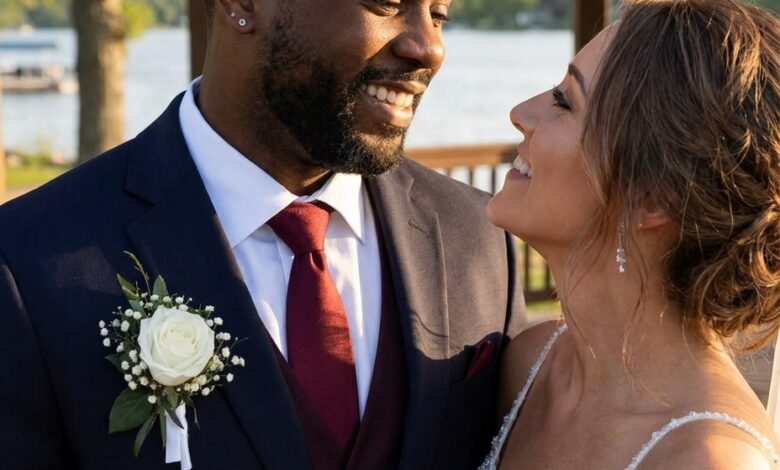
The door opened, and the smile I had been practicing all afternoon disappeared from my face. My daughter Kira stood on the porch glowing beside her fiancé Marcus, while his parents waited behind them with polite, nervous smiles. I had spent hours roasting dinner, arranging flowers and imagining the warm first meeting between two families about to become one. Instead, one thought hit me before I could stop it: Marcus was Black, and Kira had never told us. Beside me, my husband Bradley stiffened. Kira saw both our expressions immediately and asked, with a sharpness that told me she had expected exactly this reaction, whether we planned to invite them inside. That was the first moment I realized she had not hidden Marcus from us because she was embarrassed by him—she had hidden him because she was embarrassed by us.
In the kitchen, away from our guests, I demanded to know why Kira had kept something so important from us. She answered simply: because she knew how we would react. Bradley went even further, declaring that his daughter was not going to marry a Black man, while Kira reminded us that the decision belonged to her. Dinner afterward was painfully polite. Marcus was thoughtful, attentive and clearly devoted to my daughter, yet I remained fixated on the differences I had decided mattered before knowing anything about him. Then Marcus’s mother, Betty, quietly admitted she had similar reservations about Kira. Instead of challenging each other, we found relief in discovering we shared the same prejudice. We convinced ourselves that we were protecting our children from cultural differences, and from that point forward we interfered with nearly every part of their wedding—church, food, traditions, guest lists and even the people we thought they should marry instead.
Our interference became uglier when Betty arranged for Marcus to meet a woman from her church while I secretly pushed Kira toward the son of one of my colleagues. Neither meeting was presented as a date, but Kira and Marcus quickly discovered what we were doing. They confronted us together, furious and humiliated, and for the first time I was forced to hear our behavior described without the respectable language Betty and I had wrapped around it. We kept saying we wanted what was “best” for them, but Kira pointed out that we were lying, manipulating and trying to separate two adults who had chosen each other. Then she said something that struck harder than anything else: Betty and I spent weeks insisting our families were too different while becoming nearly identical allies in our attempts to control them. Across the room, Bradley and Marcus’s father Rod were drinking beer and laughing over a football game, having gradually discovered that the differences we feared had not prevented them from simply liking each other. Kira gave us a choice—accept the marriage or stay away from the wedding.