My Neighbor Returned My Mother’s 36-Year-Old Mixer Dirty and Broken—So the Next Time She Asked to Borrow Something, I Handed Her a Contract
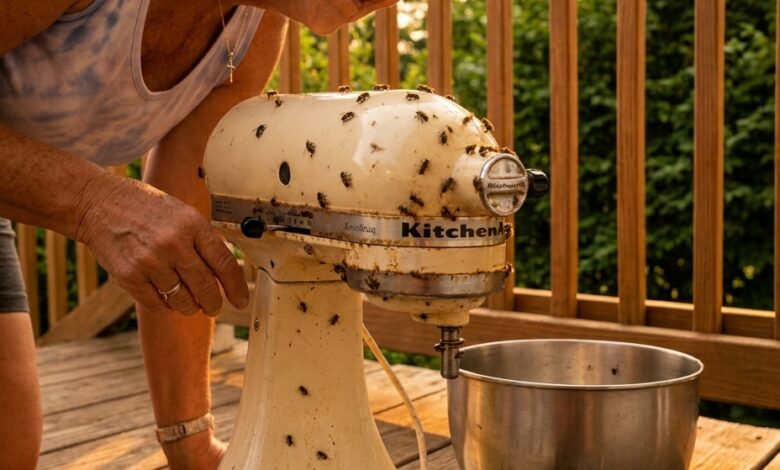
Denise called the agreement petty and announced she would simply rent everything elsewhere. Saturday morning she returned, half dressed for the party and visibly panicked because the rental company had delivered chairs but no tables. I handed her the same agreement. With guests arriving in two hours, she finally wrote a check for $697: $350 held as a refundable deposit and $347 covering the repair expense she had refused to pay. I helped carry the items over because my goal was never to sabotage her celebration. The following afternoon she returned everything before the deadline. The tables were folded, the cooler had been washed and dried, the crock pot was spotless and the drink dispenser looked cleaner than when it left my house. I returned her full deposit. When she asked whether I was really keeping the other $347, I told her I wasn’t—the repair shop was. Then I explained that breaking the mixer had not actually been the worst part. Leaving something precious to me filthy on the porch and blaming me when it failed was.
For once, Denise had no quick excuse. She admitted she should have knocked, explained what happened and apologized instead of treating my belongings as though their value disappeared when they entered her house. Two days later I picked up the repaired KitchenAid and listened as the old motor returned to its smooth, familiar rhythm. That weekend my daughter Sophie and I made my mother’s chocolate cake with it, and for a few minutes the kitchen sounded exactly the way I remembered. Denise stopped borrowing things for several months. When she finally asked for the pressure washer again, she sighed and asked whether I still had “the forms.” I did. She signed one, returned the machine clean, on time and with a full tank. The lesson was never that neighbors should stop helping one another. It was that generosity works better when the person receiving it understands that what belongs to someone else still has value—even when that value is something they cannot see.