My Daughter Vanished on My Wedding Day—A Month Later, She Came Home and Asked My Husband One Question
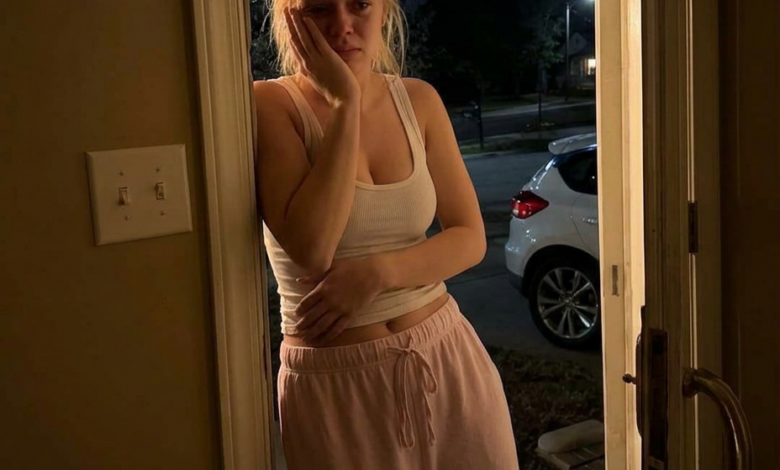
A month after my daughter disappeared on my wedding day, she stood on my porch beneath a gray Sunday sky, thinner than I remembered and clutching the same backpack she had taken with her. I did not ask where she had been; I simply pulled her into my arms and breathed in the familiar scent of her hair, grateful beyond words that she was alive. Anna held me for barely a second before her body stiffened. Then she stepped away and looked past my shoulder toward Rick, my husband of exactly four weeks, who had appeared in the hallway behind me. Her expression changed so completely that I hardly recognized my own child. “Tell her who William is,” she said. Rick’s face went the color of old paper. The name struck somewhere deep inside me because William belonged to a life I had buried almost twenty years earlier—a boy I had loved before Daniel, before motherhood, before everything I thought my adult life had become—and I had never once spoken his name to Rick.
Three years earlier, I had met Rick at a school fundraiser when he offered me coffee with a hand that trembled slightly around the paper cup. I was still learning how to live after Daniel’s death, and Rick, a middle-school music teacher with kind eyes and an old-fashioned love of vinyl records, made me feel like a woman again rather than a widow everyone was afraid might break. We dated quietly until I finally introduced him to Anna, who was eighteen and still kept Daniel’s watch beside her bed. To my relief, they connected almost immediately over music, and one evening Anna leaned toward me and whispered, “Mom, you finally made a good choice.” I believed her. Rick proposed at my kitchen table months later, and I accepted without hesitation. Yet three weeks before our wedding, Anna suddenly stopped speaking to him. She cried behind her bedroom door, left rooms whenever he entered, and once asked me a question I should have taken far more seriously: “Is there anything about your life before Dad that you never told me?” Rick persuaded me that she was simply struggling with grief and the prospect of her mother remarrying. On the morning of the wedding, Anna refused to get out of bed. When I begged her to come with us, she whispered two words into her pillow: “Then don’t.” I married Rick anyway. That evening we returned to an empty house and found a note on the kitchen table in Anna’s handwriting: I don’t want to see you again. Don’t look for me. Because she was eighteen and had apparently left voluntarily, the police could not compel her to return. For the next month, Rick comforted me while repeatedly insisting that Anna merely needed time. I did not yet understand how badly he needed me to believe that.
Now Anna was home, and within minutes the story I had trusted for three years began collapsing. She told me that several weeks before the wedding, Rick had asked her to retrieve his passport from a dresser drawer. Hidden beneath his belongings were two old photographs of me at nineteen with a young man Anna initially mistook for Daniel because his eyes, chin, and expression looked uncannily like her own. On the back, in my handwriting, were two names: Claire and William. When Anna asked Rick about them, he snatched the photographs away and began questioning whether she had shown them to me. Frightened by his reaction and unwilling to accuse him without proof, she found William herself and spent the month after my wedding learning what had happened. Then she handed me a DNA report. The language was clinical, almost cruel in its simplicity: William was her biological father with a probability of 99.99 percent. Daniel, the man who had raised Anna from infancy, remained her father in every emotional sense that mattered, but the result opened a door I had kept closed for eighteen years. I called William from Anna’s phone. His voice broke when he heard mine. He told me that after his father abruptly moved him away when we were young, he had written letter after letter to me and entrusted every one of them to his older half brother, who still lived nearby and promised to deliver them. That half brother was Rick. I had never received a single letter. Instead, William eventually received one supposedly written by me saying I had moved on and never wanted to hear from him again. I had never written it. As William spoke, Rick stood across the room without denying a word, and I finally understood that the man I had married had known exactly who I was long before he ever offered me that trembling cup of coffee.