My Husband Hid Me at His Company Gala Because of My Cheap Dress—Then His Billionaire Boss Saw My Necklace
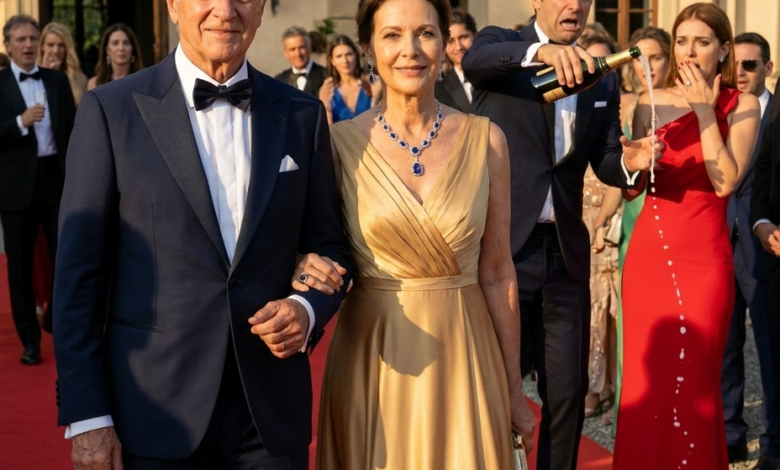
Julian had barely finished telling me to stay near the kitchen when the ballroom went silent. I stood beneath a chandelier in a simple navy-blue dress he had already mocked as looking like “catering staff,” one hand closed around the old silver necklace I had worn since childhood. His billionaire boss, Richard Kensington, had just entered with his sister Eleanor, and Julian immediately transformed into the polished executive he wanted powerful people to see. When Richard asked to meet Julian’s wife, my husband reluctantly motioned me forward and introduced me as someone “helping with the event.” Then Richard saw the necklace. The color drained from his face, Eleanor gasped, and Julian made the mistake of grabbing my arm and calling the necklace flea-market junk. Richard’s voice cut through the ballroom: “Take your hands off her.”
I had been raised by Rosa Bennett, a widowed woman in South Dallas who sold homemade food from a small cart and took me in after I was found as a little girl following a fire near Fort Worth. Rosa told me I had been feverish, burned along the collarbone, and clutching half of a silver sun necklace when she found me. Those were the only clues I ever had about my birth family. Years later, I met Julian while working at a nonprofit clinic, and at first he claimed to love the fact that I came from an ordinary background. After marriage, admiration turned into correction: speak less, hide the accent, stop talking about being poor, dress better, do not embarrass him. At the gala, Richard asked where I had gotten the necklace, and Eleanor slowly pulled a gold chain from beneath her blouse. Hanging from it was the other half of the same silver sun. When the two pieces were placed together, they matched perfectly, right down to a faded inscription on the back: E.K. — My light always returns.
Richard dropped to his knees in front of me and called me Elizabeth, the daughter he had believed dead for thirty years. He and Eleanor explained that after the crash they had been told there were no survivors; an empty coffin had been buried, private investigators had searched for years, and eventually hope had been forced into silence. Julian’s reaction told me more about our marriage than anything he had ever said. Minutes earlier, he had been ashamed to identify me as his wife; now he rushed toward me, calling me extraordinary and insisting he had always treated me well. I stepped away. In front of the investors and executives he had been so desperate to impress, I reminded him that he had ordered me to hide near the restrooms because my dress looked cheap and had spent years mocking the woman who raised me. “You love status,” I told him. “Not me.” Richard rose, turned toward Julian, and fired him on the spot.