My Late Father Left Me a Secret House—Then the Woman Inside Told Me Who She Really Was
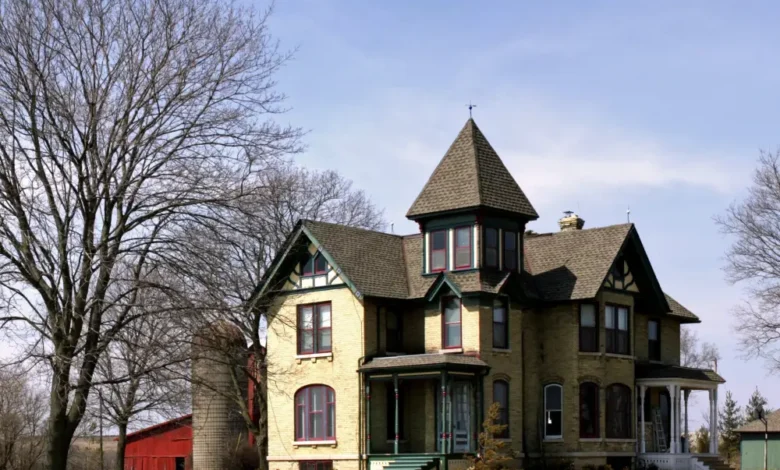
The key turned uselessly in the lock while rain ran down the back of my coat and soaked through my shoes. The house my father had left me in his will stood warm and immaculate behind freshly painted porch railings, but the key the notary had given me would not open the front door. I was still trying to understand why when the door suddenly flew open and a hard-faced woman in her sixties demanded to know what I was doing there. I told her my name was Emmeline, that my father had died, and that legally the property now belonged to me. She stared at me as though I had insulted her and said she had lived there for twenty years, paid every bill, repaired the roof, tended the garden, and had no intention of leaving. When she finally gave me her name—Deborah—I noticed a faint dimple in her left cheek identical to the one I had seen in my own mirror every morning of my life. At the time, I told myself it meant nothing.
Only days earlier, I had believed my father had died with almost nothing. The home where he raised me alone was buried under debts and headed toward foreclosure, and I had gone to the notary expecting little more than paperwork confirming how much we had lost. Instead, his will revealed a second property, owned outright and hidden from me for thirty years. I drove there believing it might be his final gift, but the house felt less like an inheritance than a sealed room from a life he had never let me see. Deborah resented my presence immediately, and after my attorney confirmed that the deed remained in my father’s name and had been devised to me, I stayed while we waited for the legal dispute to be resolved. The arrangement quickly became unbearable. She rattled pans at midnight, shut off the water, hid my keys and belongings, and finally threw my good clothes into the mud before a scheduled meeting with my lawyer. When I confronted her in the kitchen and demanded to know why she hated me, the anger she had been carrying finally cracked.
“This was my home,” she told me. “And your father took it from me. He took this house, and he took you.” Then she said the words that rearranged my entire life: “I am your mother, Emmeline.” My father had told me she was dead. Deborah told me instead that she had abandoned us when I was an infant for another man, regretted it almost immediately, and returned months later to find that my father would not forgive her. He obtained sole custody, moved away, and raised me believing my mother had died. Deborah stayed behind in the house where they had once been happy, the same house where they had brought me home from the hospital and where I had taken my first steps. She had kept my infant bracelet for thirty years, and when she placed it in my hand, my name and birth date were still engraved inside the tarnished silver band. My father had allowed her to remain in the property all those years but never told either of us about the other, leaving two women who shared the same grief—and the same dimple—on opposite sides of a secret he carried to his grave.