My Son Mowed Our Elderly Neighbor’s Lawn for Free for Four Years—Then a Lawyer Handed Him Four Envelopes at the Funeral
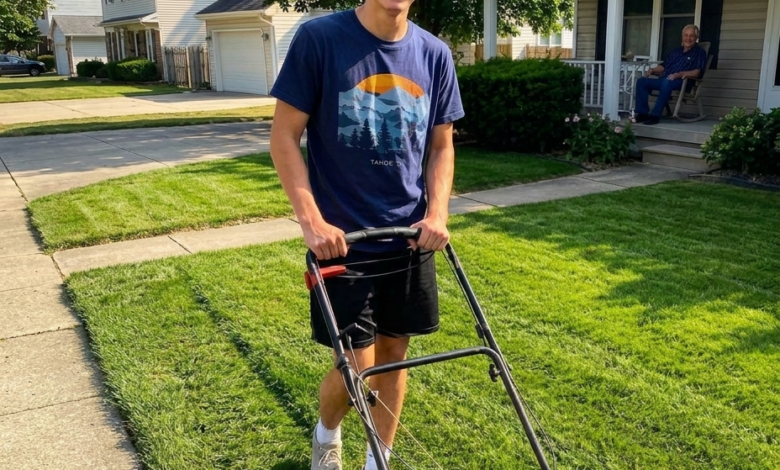
The lawyer found us in the last row of the church just as people were beginning to leave Mr. Vance’s funeral. He walked directly toward my eighteen-year-old son Noah, held out a thick envelope and asked whether he was the boy who had mowed the old man’s lawn every Saturday. Noah looked at me before taking it, confused by the attention gathering around us. Inside were four smaller envelopes, each marked in Mr. Vance’s unmistakable handwriting: Saturday One, Saturday Two, Saturday Three, Saturday Four. His grown children, Aaron and Claire, came over immediately, and neither of them had ever seen the envelopes before. The attorney explained that Mr. Vance had left very specific instructions: Noah was to open exactly one envelope each Saturday, in order. Noah gave a small, startled laugh and whispered, “That’s him,” because even in death our quiet neighbor had apparently found a way to make everyone slow down and pay attention.
Noah had been doing that for Mr. Vance since he was fourteen. I raised my son alone after his father disappeared before he was born, and I spent years worrying that growing up without a dad might leave some absence in him I would not know how to fill. Instead, he became a boy who noticed people others overlooked. One Saturday morning he saw Mr. Vance struggling with an old mower across the street, one hand pressed against his back, and announced that he was going over to cut the grass. Mr. Vance had lost his wife Margaret years earlier and spent most days sitting alone in a wooden porch chair; his children visited occasionally, but from my kitchen window he seemed almost sealed inside his own grief. Noah never asked for money and refused when I suggested he should. Through summer heat, October cold, exams and even the exhausted morning after prom, he crossed the street every Saturday during mowing season. Their conversations appeared almost comically sparse—comments about the weather, a nod toward the side yard, perhaps three words exchanged after twenty minutes of work—but the ritual lasted four years. Only after Mr. Vance died did we begin to understand how much had been happening inside all that silence.
Saturday One sent Noah and Claire to an old diner, where a woman named Ruth had been keeping a box Mr. Vance delivered six months earlier. Inside were dozens of recipe cards written in Margaret’s hand, including the cinnamon rolls Claire remembered from Christmas mornings before her mother died. Claire held the card against her chest and admitted she had stopped making Christmas breakfast because, after Margaret was gone, “the house didn’t smell right.” Saturday Two instructed Noah to take Aaron to Franklin Field and bring an old baseball glove. Aaron resisted because his son Ben had played Little League there for five years, and Mr. Vance had repeatedly refused invitations to attend; Aaron had spent years believing his father simply did not care. At the field they found another letter explaining that grief had made the bleachers unbearable after Margaret’s death. Mr. Vance confessed that he had secretly watched three of Ben’s games from beyond the outfield fence—close enough to see his grandson hit a double and throw his helmet after striking out, but too frightened by his own grief to walk through the gate. “I should have walked closer,” he wrote, and Aaron finally cried for the father he had spent years thinking had chosen everyone else over him.