My Parents Sued Me for My House—Then One Courtroom Exhibit Exposed Who Had Really Stolen My Future
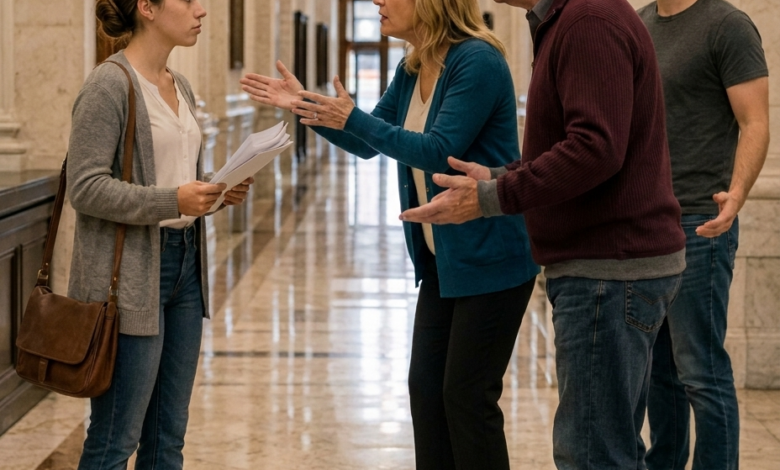
That provision changed everything. Mason exploded at my father, and in doing so revealed that although he had eventually learned where some of the money came from, he had initially believed Dad was financing him with his own funds. He admitted that after discovering the truth, he had wanted it fixed, but my father convinced him the lawsuit could frighten me into signing a settlement and keep the estate misconduct buried. The court dismissed the claim against me, referred the probate and estate issues for further investigation and left my father facing potential civil liability and criminal exposure for misappropriation, fraud and breaches of fiduciary duty as executor. My mother filed for divorce after realizing how extensively he had deceived her. Through the estate proceedings, I recovered the value diverted from Grandma’s house along with additional damages, and the protective trust passed to me under June’s contingency provision. Six months later Mason came to my door with a cashier’s check for $28,000—the only money he said he had left—and admitted that he had spent his life waiting for someone else to construct the future he believed he deserved.
I did not forgive Mason that afternoon, but I stopped seeing forgiveness as a single dramatic decision. A year later I renovated the guest room in my little house, repaired the cracked wall and framed a note Margaret had discovered among Grandma June’s estate papers. It contained five words: “For Evelyn. She builds things.” I cried because my family had spent years interpreting my competence as evidence that I required less love, less help and eventually less property than everyone else. I had not become self-sufficient because I needed nothing; I had become self-sufficient because very little had been offered. My house still had a slightly crooked porch and a faucet that complained when turned too quickly, but those imperfections no longer embarrassed me. Every room represented something I had earned without taking it from anyone. My brother’s future had never been mine to steal, and my strength had never been permission for anyone to redistribute what belonged to me. I had built my own life—and in the end, the documents my father tried to bury proved exactly that.