My Sister-in-Law Destroyed Grandma’s Garden for Her Wedding—So I Gave Her 286 Reasons to Come Back
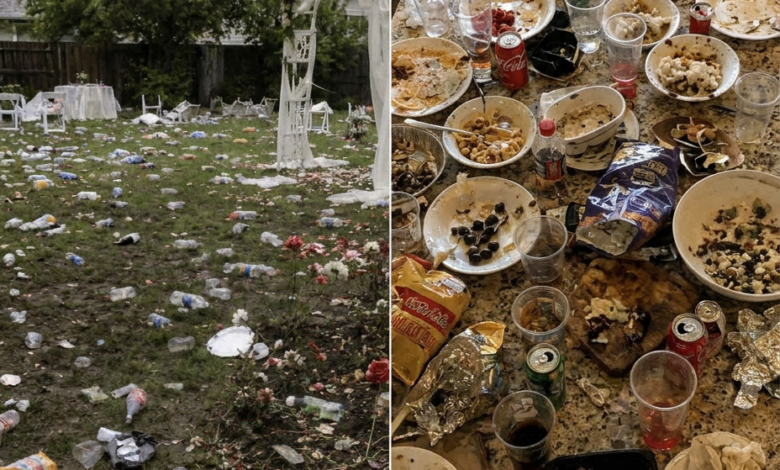
I knew something was wrong before I even opened the gate to my grandmother’s lake house. One of Grandma Penny’s hand-sewn cushions lay soaked beside the driveway, and beyond it the lawn was buried beneath plastic cups, champagne bottles and wet confetti. Deep tracks cut through the grass where heavy tables had been dragged toward the lake. Then I saw the wedding arch. My grandmother’s anniversary roses had been cut nearly to the stems, her lavender had been ripped from the soil, the daisies she planted after my first recital hung browning from ribbon, and whole peony roots lay exposed beneath the decorations. Two days earlier, my sister-in-law Kelsey had promised me she would not touch the garden. When I called and demanded that she return to restore it, she laughed and told me the flowers would grow back.
The garden was never simply landscaping. Grandma Penny had created it across decades as a living record of our family: peonies planted around the time I was born, lavender after she recovered from surgery, roses for wedding anniversaries, daisies for childhood milestones and bee balm after a difficult summer she said required something cheerful. When she died, she left me the lake house with a handwritten instruction to “Keep it lived in,” and I preserved the old yellow cabinets, handmade cushions and garden exactly because they carried those memories forward. Kelsey had needed an emergency venue after her original wedding location flooded, and although I initially refused, I finally agreed because guests were already traveling and deposits had been paid. My conditions were explicit: no cutting flowers, no moving garden borders, no heavy furniture on the soft lawn, no alterations inside the house and every piece of rubbish removed afterward. An unexpected family medical emergency kept my husband Zac and me away during the ceremony, leaving Kelsey with access to the property and no one there to enforce the promises she had made.
After Kelsey dismissed the destruction as “dirt and flowers,” I opened Grandma’s old cedar seed box and unfolded the hand-drawn garden map she had maintained for years. Every bed was numbered, measured and annotated with the memory attached to it. Zac and I walked the property, documenting each damaged area and comparing it against Grandma’s records. The final count was 286 plants, roots or established placements that had been destroyed or removed. We assembled 286 numbered packets corresponding to the original map, placed them inside the cedar box and added a laminated copy of the plan beneath a small brass plaque reading “RESTORATION KIT.” When Kelsey called furiously after receiving it, I told her I was not asking her to replace 286 flowers. I was asking her to restore 286 memories. She offered to hire a landscaper and even pay extra, but money was not the part of the damage she needed to understand.