My Grandson Wore Two Different Shoes to Dinner — Then He Told Me Why They Had to Be Fast
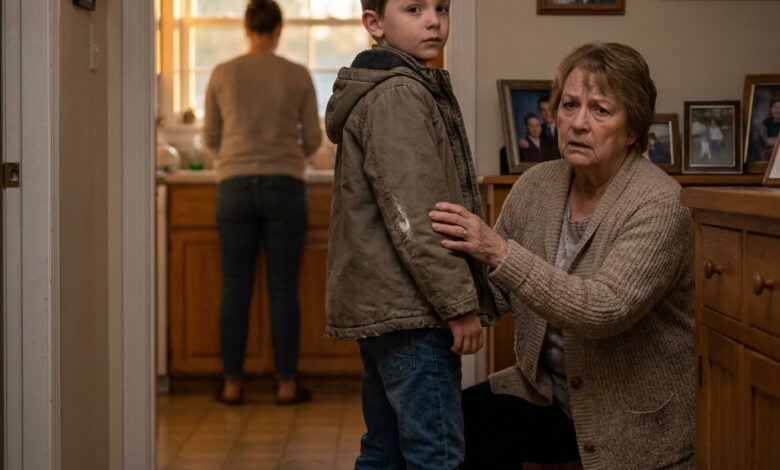
My grandson Eli arrived for Sunday dinner wearing one black sneaker and one brown sneaker, both a size too small, with the brown one held together by a strip of masking tape across the sole. He was eight years old and usually cared deeply about matching things. When he was five, he refused to leave the house because one sock had a rocket ship and the other had dinosaurs. So when I knelt beside him in my hallway and asked if he wanted to borrow slippers, he shook his head quickly. “No, Grandma,” he whispered. “These are the shoes I can find fast.” Behind him, my daughter Maren carried a casserole into the kitchen without looking at either of us. Her husband, Colin, had stayed home, she said. He had a headache. Eli looked toward the front window before adding, “When Dad gets mad, Mom says we have to be ready to go before he comes back.”
For months, Maren had explained away the changes I noticed. The bruised shadow under her eye was a cabinet door. The missed birthday lunch was a stomach bug. The reason Eli no longer answered video calls was that he had become shy. Colin had always been impatient, the kind of man who spoke softly in public and made a room feel smaller in private. I knew he criticized Maren for spending money, seeing friends, running late, buying the wrong groceries, and asking too many questions. But I had made the mistake many parents make when their adult child says everything is fine: I treated her words as the whole truth because I wanted them to be. The mismatched shoes made the truth physical. Eli was not dressing himself carelessly. He was practicing escape.
Maren heard him. Her face changed before she turned around, and when she did, tears had already gathered in her eyes. “Eli,” she said, too sharply, “we do not talk about that here.” He held out the brown shoe. On the masking tape, in Maren’s handwriting, were two words: GO BAG. I did not ask her what was in the bag. I did not tell her I should have known. I walked to the hall closet, took down the old canvas overnight bag I had used for family road trips, and began filling it with basics: clean clothes, chargers, copies of documents, snacks, Eli’s inhaler, and the spare house key I had kept on a hook since 1996. Then I told my daughter, “You do not have to explain why you need a safe place. You only have to tell me where to meet you.” Maren sat down at my kitchen table, put both hands over her face, and finally nodded.