The Store Clerk Said “Your Daughter-in-Law Returned the Bike Tuesday” — The Bike I Gave My Grandson for His Birthday
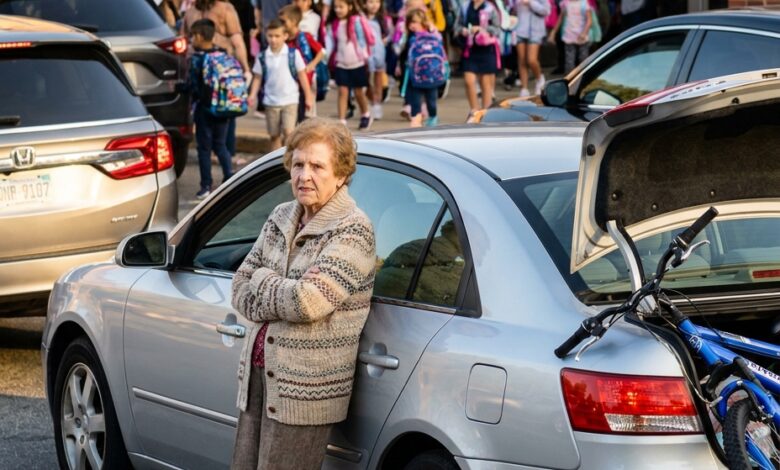
At 3:02 on a Thursday afternoon, in a school pickup line, my ten-year-old grandson asked me if he was allowed to keep his own birthday present, and I want to describe exactly what that question does to a grandmother, because it is the entire reason this story didn’t stay private: it rearranges you. “This one,” he said — meaning there was a category. A known category of things that arrive, get photographed, and go away. I said, “Max, honey, this bike is yours. It will live at MY house, in MY garage, with your name painted on the crossbar, and nobody on this earth can return what’s bolted to a name.” He nodded slowly, absorbing the constitutional law of it, and then he said the sentence I’ve now repeated to three adults and one attorney: “Mom says the pictures are so you get your feeling, and then the money is more responsible.” So you get your feeling. My daughter-in-law had built a system, and the system had a script, and the script had a part in it for a nine-year-old — pose, grin, thumbs up, write the thank-you card about Saturn — and my grandson had learned his lines the way children learn everything: completely, and without knowing what they mean.
The backstory took me two weeks and one highlighter to assemble, and here it is with the numbers attached, because this page has taught me that numbers are how you keep a story honest. Steph married my son Aaron six years ago — a warm wedding, her people are lovely, and I say that sincerely because this is not a story about a monster; it’s a story about a leak. Fourteen gifts over four years, $2,830 converted to Harmon’s store credit, and where did the credit go? Renata couldn’t tell me that, but my own eyes could, once I knew to look: the espresso machine that appeared “on clearance.” The patio set “Aaron’s bonus” bought. Steph’s boots. The air fryer. A household running a quiet $700-a-year laundering operation through a child’s birthdays — while, and here is the part that moved me from hurt to something colder, Steph’s own gifts to Max stayed. The scooter from HER mother: kept. The video game from HER sister: kept. Only my gifts had a return window. This was never about money being tight; money being tight, you come to me, I’m famously soft, ask anyone. This was about a ledger I wasn’t supposed to see, where my column was labeled “Diane’s feeling” and cashed out at the returns desk, and my grandson was the teller. The warning signs, in hindsight, formed a neat row: Max thanking me by CARD, always, because cards can be dictated, while he thanked his other grandmother by phone, breathless; the toys never visible on later visits (“at Dad’s office,” “being fixed,” “loaned to a cousin”); and the photos — always taken within an hour of the gift, always in the driveway, always the same angle, efficient as passport photos, which is what they were: documents.
I chose the confrontation venue with care, and I recommend my choice to every grandmother in this position: Sunday dinner, my table, my pot roast, everyone’s phones in the basket by the door per long-standing house rules that suddenly proved farsighted. Dessert plates down, I set two objects on the table. Object one: the Harmon’s account history, printed, fourteen lines highlighted, four years, $2,830, with Tuesday’s bicycle on top. Object two: Max’s thank-you card about Saturn, December 28th — postmarked one day AFTER the telescope went back. I said nothing. I have learned from this page’s finest villains that evidence gloats better in silence. Aaron picked up the printout first, and I watched my son read his own household’s secret history line by line, and his face did the thing I’d prayed it would do — it went from confusion to arithmetic to a slow, awful recognition — and he looked up, not at me, at his wife, and said, “The telescope? He CRIED about that telescope. You told me your mother took it to her lake house for the summer.” And Steph — I’ll give her this, she never wastes time on denial once the paper’s on the table — folded her napkin with terrible precision and said the quiet part with her chin up: “Your mother buys him things to buy him. Someone in this family has to convert all that… performance… into things we actually need.” Performance. There it was. And that’s when the chair scraped, because Max — who was supposed to be watching TV in the den, and who had instead been standing in the doorway for who knows how long in his dinosaur shirt — walked into the dining room, looked at his mother, and said, “You said Grandma KNEW. You said it was a system Grandma knew about.” And the table went so quiet you could hear the refrigerator change its mind.