An Anonymous Bidder Paid $400 for My Church Pie Every Year for 12 Years — This Year the Money Order Said “Deliver It in Person”
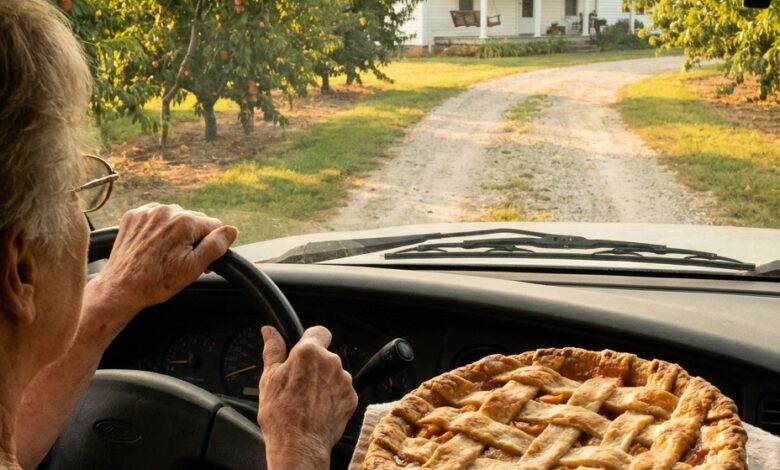
I said no for about forty minutes, which Harlan had apparently budgeted for, because he let me finish and then walked me through what his attorney had actually built, and I’m going to lay it out plainly, because there’s a reader out there with land and a circling relative who needs the blueprint more than my feelings. The orchard doesn’t come to me and never touches my pocket: the deed transfers into an irrevocable trust that owns the land outright, which — his attorney confirmed when we met that Thursday, all three of us at the kitchen table with the oxygen cat humming — takes it out of his probate estate entirely, beyond the reach of any nephew’s challenge or any developer’s Saturday visit; the trust’s terms are four lines Harlan dictated himself: the land stays in cultivation, Tessa’s family keeps the farm-stand lease at its 1998 rent, the fruit that doesn’t sell goes to the food pantry and “the front rooms” (his phrase, now a legal term of art in an actual trust document, which delights me), and the annual surplus funds the St. Mark’s auction endowment. My job as trustee is to see it done, with the attorney as co-trustee for the paperwork, a modest fund set aside for taxes and insurance on the parcel, and a successor trustee clause so the thing outlives me too. “Why me” got the only answer it ever needed: “Because you’re the pie lady. You’re the last person who made Junie greedy, and the first person in thirty years who never once asked me for a thing. That’s the whole résumé.” Saturday came, and Rick arrived with his brochures, and Harlan — who insisted I be there, “trustees should see the weather” — let him do his entire self-storage sermon before sliding the trust across the table the way I’d slid pie across it on Tuesday. I will not print everything Rick said. I will print what Harlan said back, because it belongs in a frame: “Son, you’re in the will. You get the house, the truck, and your aunt’s Buick. But the trees were never mine to leave you. They were Junie’s, and Junie’s spoken for.”
Harlan died on the fourth of October, at home, in the front room, with the window open to the orchard and — I can report this personally, because Tuesdays had become our standing appointment — a slice of peach pie on the nightstand that he’d requested and managed three bites of, which the hospice nurse told me was the most he’d eaten in four days. “Still greedy for it,” he said to me, and winked, and that was the last full sentence I got. The estate settled clean: the trust held, exactly as built — Rick’s lawyer looked at it once and advised him to enjoy the Buick — and this June, the thirteenth summer, the auction ran on the Junie Voss endowment, and my pie sold to an actual human being, a young father who paid twenty-two dollars and ate it with his kids in the parking lot, possibly out of the glove box, I didn’t ask, some things you leave to God. The phantom bid came in anyway. $400, money order, phone. I recognized the shaky hand on the envelope note eventually — Tessa’s grandmother, it turns out, was one of the front rooms that got a pie in year three, and the family decided the tradition was “part of the lease now.” So here is what I know at sixty-nine that I didn’t know at fifty-seven, and I’ll hand it to you warm: somewhere in your town, right now, somebody is paying attention to a kindness you don’t even remember doing — an eleven-dollar pie, a casserole, a knock on a front-room door — and keeping receipts under a sugar bowl. You don’t get to know which kindness it is. That’s the deal. So bake the pie every year like it matters, because one June, up a gravel driveway you’ve driven past for thirty years, you may find out it was holding up more than dessert. And if a dying man ever slides a trust across his kitchen table and asks you to keep his wife’s trees alive — say your forty minutes of no, and then say yes. The peaches, I can now tell you as their legal guardian, have never been sweeter.