My Daughter-in-Law Published My Late Mother’s Stolen Recipes as Her Own — Then the Fair Judge Read Both Entry Cards
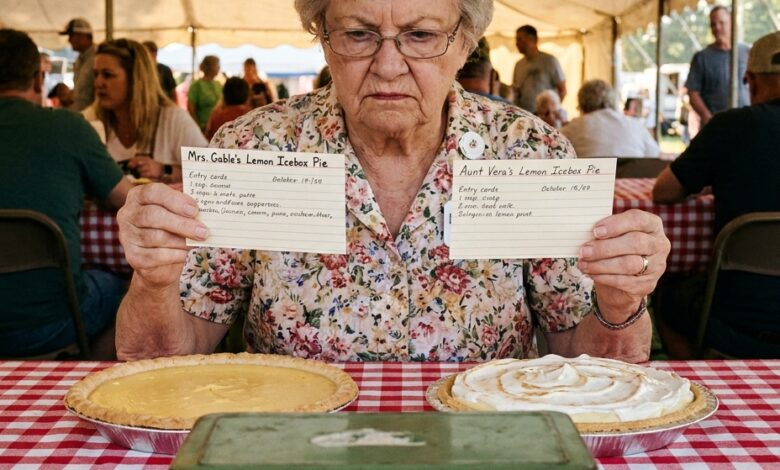
The box was in their attic, in a bin labeled XMAS, and Michael brought it to my house himself that night, hinge and all, and set it on my kitchen table with the caution of a man carrying a relic, which he was. What followed took a season to sort. I did see an attorney — not to burn my family down, but because $11,000 in sales and a live print listing meant this could not be settled with an apology and a casserole: intellectual property in recipes is genuinely narrow, the attorney explained — a bare list of ingredients isn’t protected, but Rose’s written expression was, her phrasing photographed and reprinted (“thin as a secret” appears in that book eleven times), and the box itself was estate property that had been in my possession by right since probate closed nine years ago, which made its taking a straightforward matter regardless of any copyright question. The settlement we reached — around my table, attorneys reviewing but family talking — had four parts: the listing came down; a corrected edition was issued, retitled ROSE’S TABLE, with every recipe credited “from the handwritten collection of Rose Novak, 1931–2017” and a real introduction that tells the truth; restitution of the profits, which went, all of it, at MY insistence and to Kayla’s visible relief, into a scholarship at the community college’s culinary program under Mama’s name; and the sixty recipes Kayla had published stay published — corrected, this time, with the burglar insurance removed, because Mrs. Albrecht was right: the tablespoon is what makes the crust sing, and my mother would want the crust to sing more than she’d want the secret kept. Insurance, Mama always said, is for while you’re being robbed. We weren’t being robbed anymore.
Kayla and I are careful with each other now, which is honest, and better than fake. She came to me in the fall — herself, no lawyers, no Michael — and told me the part that wasn’t in any settlement: she took the box during the funeral week on an impulse she still can’t explain, meaning to copy a few recipes and return it, and then the returning got harder every month it didn’t happen, and then the little lie needed a bigger lie to live in, and one day she woke up with a blog, a book, and a dead woman’s handwriting in her attic like a stolen saint. I believe her. Small thefts grow into biographies; I’ve watched it happen in better families than ours. She does the dishes at Sunday dinner now, every week, unasked, which in the Novak language is a formal apology renewed weekly, and I have started — slowly, at my counter, hand to hand — teaching her granddaughter-in-law the real versions. All of them. Corrections included. Because here is the wisdom my mother’s green tin finally taught me, forty years after she rigged it: secrets are only insurance while you’re alive to be the vault. Write your people down. Credit your dead. Say out loud, at the table, with witnesses, WHOSE pie it is — because the ribbon fades and the tin rusts, but a name on a recipe outlives everybody at the fair. First prize, by the way, went to neither of us. It went to a fifteen-year-old with a strawberry-rhubarb and no idea what she’d witnessed. Mama would have died laughing all over again.