My Son Scheduled My Dialysis So He’d Know When to Empty My House — My Grandson Called Me From a Closet
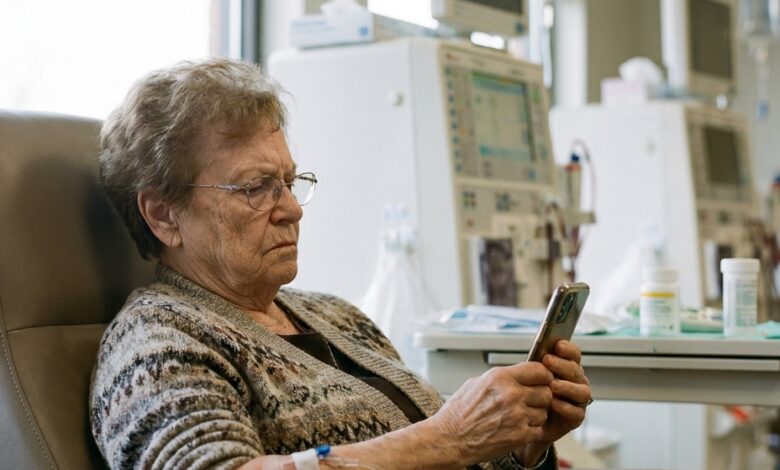
The phone buzzed at 10:23 on a Tuesday morning while a dialysis machine cleaned my blood through a needle in my left arm. My ten-year-old grandson Tyler was whispering from inside his bedroom closet. “Grandma, there’s a truck here. Men are carrying your dresser out. And Daddy says you’re not coming back.” I was strapped to a chair at a clinic on Broad Street in Chattanooga with three hours left in my session, and sixty blocks away, my son Kevin was loading my bedroom furniture into a moving truck while a real estate agent placed a FOR SALE sign against the porch railing of the house my late husband Walter and I had paid off in 2009. I could not stand up. I could not leave. The needle in my arm was the entire point. For eight months, Kevin had driven me to every dialysis appointment — Tuesday, Thursday, Saturday, four hours each — and I had thanked him for being a good son. He wasn’t being a good son. He was building a schedule. He knew exactly where I would be, exactly how long I would be trapped, and exactly how much he could move out of my house before the machine let me go.
Kevin’s troubles with money were not new, but I had spent years calling them something gentler. There was the business loan Walter co-signed in 2011 that we quietly paid off after the restaurant failed. There was the $22,000 I gave him in 2018 for what he called a “bridge situation.” There was the credit card he opened using our home address that I found out about only when a collections notice arrived with his name on it. After Walter died and my kidneys began failing, Kevin appeared at my door with groceries and a schedule, and I mistook logistics for love. What I didn’t know was that during those months, he had been photographing my documents, practicing my signature — a skill he’d had since forging permission slips at fourteen — and telling people I was in cognitive decline. He told the real estate agent I was in a memory care facility. He told a mortgage broker I had authorized a reverse mortgage application against my paid-off house. He told his wife it was all temporary. The only person he told nothing was Tyler, who stayed home sick that Tuesday and watched his grandmother’s life being carried down the front steps.
I turned Tyler into my eyes. While the machine hummed beside me, he sent photos from behind curtains — the truck, the sign, and a listing agreement on my kitchen counter carrying a signature I had never signed. Beneath it, a reverse mortgage application with my name typed at the top. Then Tyler photographed the real estate agent’s face, and my blood pressure alarm went off, because I knew her. Diane Kowalski. I taught her fourth grade in 1987 and bought her school notebooks for two years because her mother couldn’t afford them. I called her agency’s number from the dialysis chair. When I told her I was hooked to a machine on Broad Street and had never signed anything, the line went silent for four seconds. Then she said something that made the nurse take my phone and hold it to my ear because my hands were shaking too hard: “Mrs. Vance, don’t call the police yet. There’s something in these documents your son doesn’t know I noticed. Give me one hour.”