A Locksmith Called to Confirm Tuesday’s Rekey “for the New Owner” — Of the House I’ve Owned for 34 Years
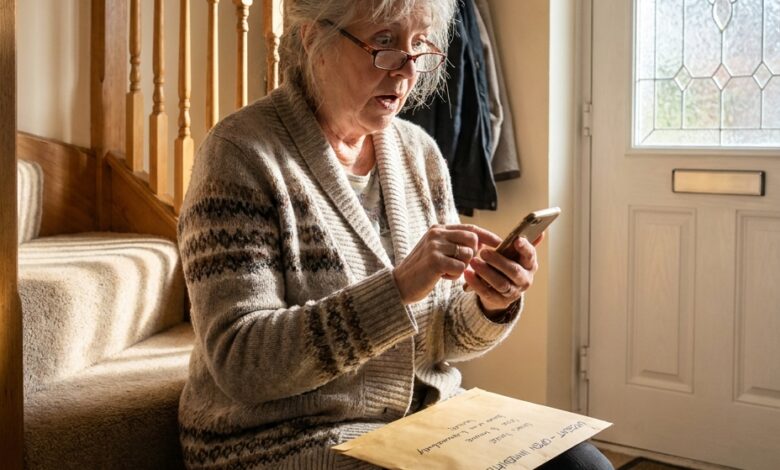
The call came from the locksmith company at 2:10 on a Friday, chirpy and routine: confirming Tuesday’s appointment, 9 to noon, full rekey of front, back, and garage — and could I verify the tenant would not be present, as the new owner requested? I have owned 612 Larkspur Lane for thirty-four years. It is paid off. I was standing in its hallway. The young woman’s typing paused and she read from her work order, not unkindly, which somehow made it worse: the property transferred three weeks ago; they do these all the time after a sale, when “the previous occupant is still in the home.” The previous occupant. I did not scream — I asked for the name on the work order and wrote it on an envelope with a shaking hand: T. Marsh Holdings LLC. Then I sat down on my stairs and did the twenty-minute thing I now want taught in every church basement in America: I looked up my own deed on the county recorder’s free website. And there it was, recorded twenty days earlier — a quitclaim deed transferring my home to T. Marsh Holdings for “$10 and other valuable consideration,” over a notarized signature I never signed, bearing a detail that turned fraud into betrayal: my full legal name, Rosemary Ellen Castellanos-Webb, hyphen and all — the version that appears nowhere public, not on my mail, my checks, or the tax rolls. It appears on exactly one class of paper on this earth: the original 1992 documents in the fireproof box in my hall closet. My “new owner” had been in my closet. My new owner had a key. And in four days, my new owner was having the locks changed on a Tuesday morning — the one morning of the week when, as the whole family jokes, you never call Grandma before noon, because Tuesday is my standing hair appointment, and everyone who has ever sat at my table knows it.
Deed fraud, I have since learned, is a growth industry — county recorders’ fraud units will tell you the paperwork to steal a paid-off house is thinner than the paperwork to return a toaster — but most of it is committed by strangers harvesting names off public records. Strangers don’t know your hyphen. Strangers don’t know your hair appointment. So while I waited for Lupe — my best friend, 26 years at a title company before retiring, who answered my call with six words, “Do not leave that house, I’m coming” — I made myself inventory who fit inside my closet, my calendar, and an LLC filed, the state’s website showed, five weeks ago by a registered-agent service that exists to hide exactly this. The list was short and it hurt: my nephew Teddy — T., Marsh being his late mother’s maiden name, my sister’s name, a detail he perhaps thought was sentimental and I can only read as a confession — Teddy, who housesat for me in April while I visited my cousin; Teddy, who asked that same month, idly, over my pot pie, whether I kept “the house stuff” in the bank or at home; Teddy, whose contracting business had gone quiet and whose truck had gone back to the dealer; Teddy, who is the reason the locksmith’s callback number, when the chirpy young woman read it to me at Lupe’s instruction, was a number I have known by heart since it was his college dorm’s.
What Lupe built between Friday at 3:00 and Monday at 5:00 was a counter-ambush assembled from thirty years of title-industry muscle memory, and I am setting it down step by step because some reader’s Tuesday depends on it. Friday: the county recorder’s fraud unit took my sworn complaint by phone and flagged the parcel — meaning no further document could record against my house without direct review — and their investigator, a patient man named Mr. Osei, pulled the fraudulent deed’s notarization and found the first crack: the notary’s journal, which the law requires, had no entry for any Castellanos-Webb, and the notary herself, confronted by the state’s notary division Monday morning, admitted her seal had been “borrowed” by a former coworker’s son doing “a family paperwork favor.” Saturday: Lupe walked me through an owner’s title-insurance claim on my 1992 policy — the policy I forgot I had, that nearly everyone forgets they have — whose fraud desk opened a file before lunch and assigned counsel at no cost to me, because a forged deed poisons the title they insured. Sunday: an elder-law attorney from my church, working Lupe’s checklist, drafted the quiet-title action and an emergency motion for Monday filing, plus an affidavit of forgery with my true signature exemplars from four decades of DMV records. And Monday at 5:00, Mr. Osei called with the piece that moved this from paperwork to handcuffs: T. Marsh Holdings had, ten days earlier, applied for a $180,000 loan against my house — the actual point of the whole scheme; thieves don’t want your house, they want to strip its equity and vanish before you open your mail — and the lender, contacted by the fraud unit, had not yet funded. It would now “delay for verification.” The trap, in other words, still needed its Tuesday: the rekey that would let “the owner” stage the property, sign the lender’s inspection, and finish the theft while the previous occupant sat under a hair dryer across town. So we let Tuesday come. At 9:20 the locksmith van pulled into my driveway, and behind it, right on schedule, my nephew’s borrowed sedan — and Teddy walked up the path of my house with a folder and a new-owner smile, and the door opened before he could knock.