My Medical Alert Called My 3 Children in Order — Voicemail, Declined, Disconnected. A Pizza Boy Came Through the Window
When you fall at 81 and the hip won’t take weight, and you’re wearing the pendant your children gave you “for our peace of mind, Mom,” you learn what the system actually does: it calls your emergency contacts, in order, on speaker, so you can hear every ring from the bathroom tile. Contact one, my son Jeffrey: six rings, voicemail, retry, voicemail. Contact two, my daughter Dana: declined — you can hear the difference, it cuts off mid-ring — retried, declined again. Contact three, my youngest, Petey: “the number you have dialed is no longer in service,” changed eight months ago, never updated, never mentioned. I lay on that floor from afternoon into almost-dark, listening to my three children not answer in sequence like the world’s cruelest phone tree, and the bitterest part is that I knew exactly where they were, because I’d read about it all week in the family chat I’m included in for logistics but not invitations: Dana’s lake weekend, the new boat, the party I wasn’t asked to because “it’s really more of a young-families thing, Mom.” The operator’s voice came through the pendant — dispatching emergency services, stay with me, is there a neighbor? — and I gave her the answer that still makes me laugh and cry in the same breath: “Honey, the only person who comes to this house on a Saturday is the pizza boy, and I didn’t order a pizza.”
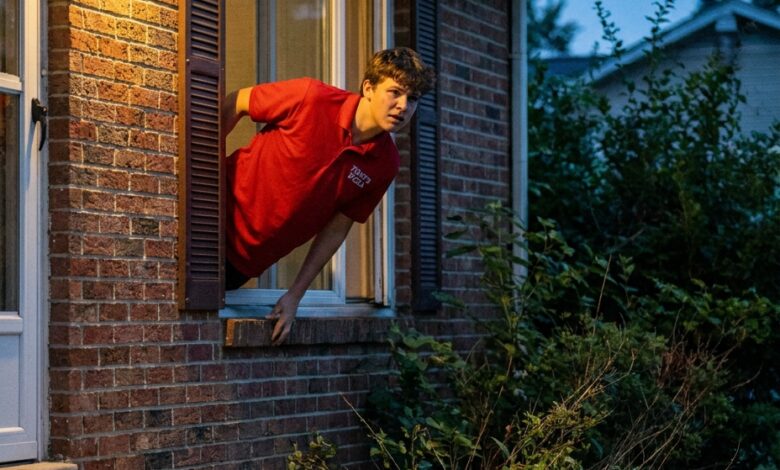
Someone had. Two doors down, house 114, the new family had ordered a large pepperoni, and nineteen-year-old Marcus DeSoto misread the ticket and carried it up the path of 144 instead — my path — where he heard an old woman’s voice through a bathroom window and did not do what a hundred hurried people would have done. He set down the pizza. He talked to me through the screen — “Ma’am, I’m coming in, don’t you worry about the window, my boss can bill me” — and this skinny teenager came through my bathroom window like it was a drive-thru, unlocked the front door for the paramedics, held my hand while they braced my hip, called his boss to say he’d be late, and then sat in the emergency room for two hours with a cold pizza because, as he told the nurse, “Miss Ruthanne needs somebody here till her people come.” Her people. I want to be fair in this part, because fairness is what makes the rest of it land: my children are not monsters; they are busy, comfortable people who had been performing attentiveness for years while outsourcing it — the pendant instead of the visits, the family chat instead of the phone calls, the “Mom, you should downsize” instead of the “Mom, how are you.” The lake weekend didn’t create that. It photographed it. And the warning signs I’d been swallowing — holidays trimmed to ninety minutes, my birthday celebrated a week late “when it’s calmer,” the way Dana’s kids call me “Grandma Ruthanne” like a formal title for someone they’ve heard described — all of it had been rehearsal for a Saturday when the phone tree would ring in order and nobody would pick up.
They arrived Sunday afternoon, all three, sunburned and supplied with reasons — the boat charger, the spam calls, “the important thing is you’re okay, Ma” — and the smoothing might have worked, it has always worked, except medical alert systems keep logs. Time-stamped, printable, pitiless logs, which the company mails to the account holder on request, and I am the account holder. Every ring. Every voicemail. Both DECLINES, 7:39 and 7:41 p.m. And one more entry that rearranged my family forever: at 7:52, eleven minutes after my daughter declined her mother’s emergency a second time, the system reached a secondary number added to the account years ago as a formality — Dana’s husband, Rick. Rick answered on the second ring, from the same lake house, standing close enough to my daughter to hand her the phone. He didn’t hand her the phone. The log shows a four-minute call with the operator; the operator’s notes, which I have read, show a man asking the address twice, saying “I’m two hours out, is someone closer,” being told about the pizza boy and the ambulance, and answering, “Then I’m leaving now. Tell her Rick is coming.” He drove two hours in boat clothes and was in my hospital room by 10:15, still smelling of lake water and sunscreen, and he sat with me until midnight. And in that room, with the door closed, my son-in-law of twenty-two years told me the part I had no log for: what my daughter said when he grabbed his keys. I made him say it twice, because I needed to be sure I would never soften it in my memory. She said: “Rick, sit down. The service calls the ambulance either way. That’s literally what we pay for.”