The Landlord Tripled My Diner’s Rent in Front of My Regulars — He Didn’t Know What Those Four Old Men Did for 30 Years
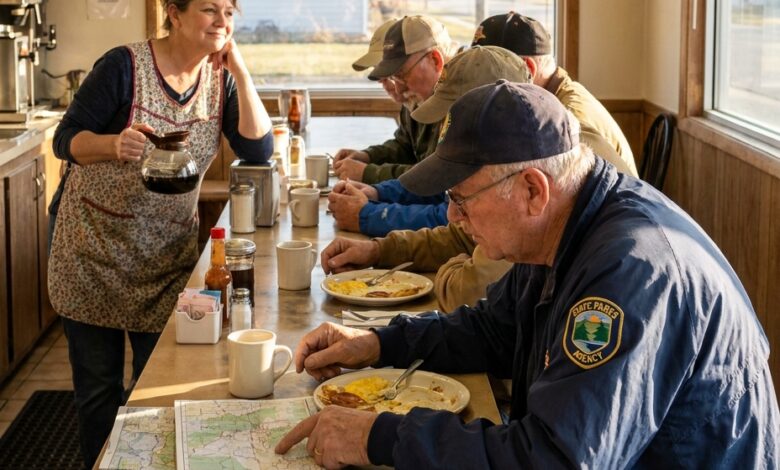
What happened next took eleven minutes, and my waitress Carla has retold it so many times she now performs the parts. The state inspector — Ellis’s successor, there on an official follow-up of the 1998 conditional record — introduced himself first and handed the landlord a compliance order: the inherited structural repairs, ignored for eight months, were now due on a clock, with escalating penalties, and no cosmetic “modernization” permit would even be reviewed until they were complete and inspected. Marcus slid across the counter a certified copy of the fraudulent permit filing with the suspended contractor’s license flagged in yellow — the county had rejected it that Thursday, and rejected filings with false attestations, the cover letter noted, are routinely referred for review. Bennie, purely as a courtesy between professionals, mentioned that the fire marshal’s office would be taking a warm interest in the building’s stairwell timeline. And Judge Pierce, who had said nothing the whole time, finally folded his newspaper and delivered the closing argument of a forty-two-year career in one sentence: “Son, you came to raise the rent on the only tenant who’s been keeping your building alive — I’d sit down, order the special, and ask this good woman for a lease extension while she’s still in a forgiving mood.” The smoothie representative left without ordering. The landlord sat down. And Dot’s Diner signed, three weeks later, a five-year lease at a rate my attorney — Judge Pierce’s granddaughter, as it happens — described as “an apology with a signature line,” while the landlord’s repair crews, real ones this time with real licenses, fixed the joists my regulars had been eating breakfast above for years.
The counter looks the same as ever, which is the whole point of counters, but there’s one addition: a small hand-lettered sign Carla made that hangs over the four stools and reads “THE DEPARTMENT,” which is what the whole neighborhood calls them now — people bring them lease letters and permit questions with their hash browns, and Ellis, who has gone back to two hundred words a year, adjudicates in nods. The landlord, credit where due, has become almost civilized; he eats here Tuesdays, pays cash, tips fine, and has never once reached for the toothpicks. People keep telling me I got lucky with my regulars, and they’re half right — but luck isn’t the lesson I pour with the coffee these days. The lesson is this: for thirty-one years, I thought I was the one taking care of the counter — filling cups, remembering orders, holding stools for men whose wives had passed and whose departments had retired them into silence. It turns out a diner counter is a savings account. Every cup, every remembered order, every “the usual, hon” was a deposit, and on the morning a man with a toothpick tried to take the whole thing, four old men stood up — well, they stayed seated, that’s their way — and paid it all back with interest that only decades can earn. Take care of your regulars, whoever your regulars are. Someday the envelope comes. And you want The Department at the counter when it does.