At Grandma’s Funeral, I Learned My Parents Had Stolen My Future—and She Had Planned for This Day
For as long as I can remember, my parents always said the same thing whenever I mentioned college: “We wish we could help, but we just don’t have the money.” I believed them without question. I never blamed them. Instead, I worked after school, picked up weekend shifts, applied for every scholarship I could find, and eventually graduated with more than $80,000 in student loans. Meanwhile, my younger brother seemed to live a completely different life. My parents helped him open a restaurant, covered the down payment on his first house, bought him a new truck, and even paid for a beautiful wedding. Whenever I wondered how they suddenly had money for all of that after telling me they couldn’t afford my education, they would smile and say, “Things got better over the years.” It never felt fair, but I convinced myself life simply wasn’t fair sometimes.
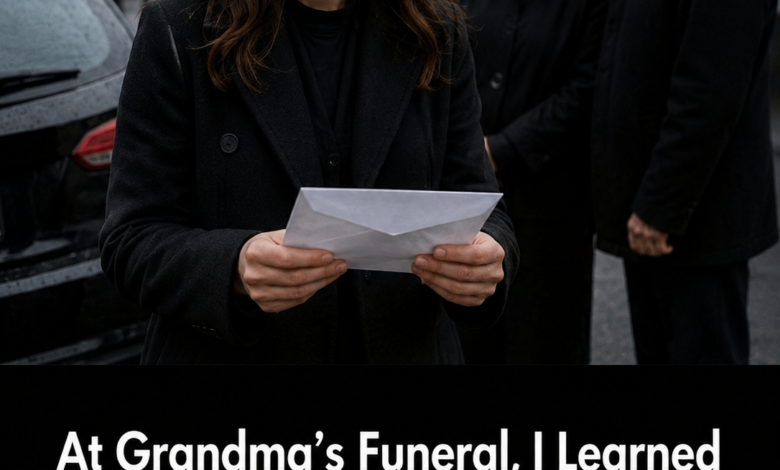
Everything changed the afternoon of my grandmother’s funeral. As people slowly walked back to their cars, her attorney asked me to stay behind for a moment. He handed me a small sealed envelope with my name written on it in my grandmother’s handwriting. My parents immediately stopped talking and stared at it. I remember thinking it was strange how nervous they suddenly looked. Inside wasn’t money or a personal goodbye. It was one handwritten sentence: “Ask your parents what happened to your college fund.” I couldn’t even process what I was reading. College fund? I had spent my entire life believing one had never existed. When I looked up, my mother had tears in her eyes, while my father refused to look at me. In that moment, I realized the envelope hadn’t surprised only me—it had terrified them.
That evening I drove straight to my parents’ house and placed the note on the kitchen table. At first they insisted Grandma must have been confused, but their story fell apart within minutes. My father finally admitted that my grandparents had started a college savings account for me shortly after I was born, adding money every birthday and every Christmas until it had grown to nearly $100,000. A year before I graduated high school, my brother’s restaurant was on the verge of bankruptcy. Instead of telling me the truth or asking for permission, my parents emptied the entire account to save his business. They promised each other they would rebuild it before I ever found out. They never did. The hardest part wasn’t the money—it was hearing my mother quietly say, “You were always responsible. We knew you’d figure life out somehow. Your brother wouldn’t have.” For the first time in my life, I understood that they hadn’t chosen between two children in a moment of desperation. They had made that choice years earlier.
Two days later, the attorney called again and asked me to come back to his office because there was one more document my grandmother wanted me to receive. She had discovered the missing college fund several years before she passed away. She confronted my parents, and when they refused to tell me the truth, she quietly changed her will. She left me her lake house, her savings, and a letter explaining that she couldn’t undo what had been taken from me, but she could make sure honesty won in the end. My parents inherited only a small amount, while my brother received nothing except a short note that read, “You already received the gift that belonged to your sister.” According to the attorney, my grandmother wanted those exact words read aloud in the room. Nobody said a single thing afterward.
Selling the lake house allowed me to pay off every dollar of my student loans and finally buy my own home without asking anyone for help. My parents apologized more times than I can count, and although I eventually accepted their apology, our relationship has never been the same. Money can be earned again. Trust cannot. Looking back, the greatest gift my grandmother left me wasn’t the property or the inheritance—it was the truth. She made sure that even after she was gone, the lie that shaped my entire adulthood couldn’t survive one more day.