My Family Told My Daughter She Had to Pay to Belong — So I Finally Showed Them What “Family Treatment” Really Meant
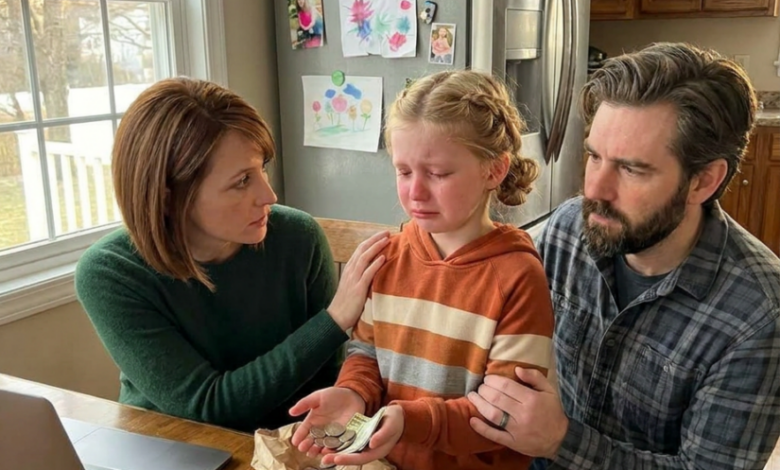
When I opened the front door and saw my twelve-year-old daughter sitting alone at the kitchen table, I knew something was wrong before she said a word. The house was too quiet, not peaceful, but heavy — the kind of silence that settles after a child has tried to be brave for too long. Mia’s backpack was on the floor, her shoulders were hunched, and her hands were pressed flat against the table. When I asked what happened, she looked up with tired eyes and whispered, “I worked.” Then I saw her fingers. They were red, irritated, and sore from hot water and cleaning products. She had spent three hours cleaning Mrs. Novak’s house after school for twenty dollars because my mother had told her she needed to contribute one hundred dollars toward my niece Sophie’s birthday gift — or she would not be treated like family anymore.
For a moment, I could not speak. Mia explained that Sophie wanted to go to horse camp, and the family was collecting money for her birthday. She had broken open her piggy bank, but it was not enough, so she found work after school and came home with hands too sore to hold a pen properly for homework. When I asked who told her she had to pay, she said, “Grandma.” I called my mother immediately, hoping there had been some misunderstanding. There wasn’t. My mother admitted it without shame, saying twelve-year-olds needed to learn responsibility and that Mia should understand what supporting family meant. That word — responsibility — hit me harder than anything else, because it was the same word they had used on me my entire life whenever they wanted me to give up something for everyone else.
Suddenly, I remembered everything clearly. I was the oldest child, the one expected to understand, to help, to sacrifice, and to stay quiet. Heather, my sister, got more because she was younger. Leo got more because he was the boy. I was the dependable one, the useful one, the one who worked early, paid bills, helped my parents, helped Heather with her mortgage, and supported Leo whenever he decided he needed another chance to “find himself.” I had called it family for years because that was what I had been trained to call it. But when Mia came home with sore hands because she believed her place in the family had a price tag, I finally saw the truth. This was not love. It was a system, and they were trying to pass it down to my daughter.
That night, Mia brought me an envelope filled with crumpled bills and coins. With the twenty dollars from Mrs. Novak, she had ninety, and she was already thinking about asking for more work. My heart broke at how seriously she believed she had to earn her belonging. I put ten dollars in her hand, then gently closed her fingers around it and told her she was keeping every cent. “You do not pay for love,” I said. “You do not pay to belong in a family. If someone says your place costs money, that is not love. That is a transaction.” Then I sent one message to the family group chat: Mia would not be contributing to Sophie’s gift, and we would not be attending the party. After that, I opened my banking app and canceled every recurring payment I had been making for my parents, Heather, and Leo.
The backlash came quickly. Calls, messages, accusations, and then the final line: my parents showed up outside Mia’s school and told her she had ruined the family by telling me. That day, I removed them from every school contact list and cut off their access completely. Weeks later, they came to my house saying they were willing to “move past this” and return to normal. I told them no. No to normal. No to payments. No to making a child responsible for adult problems. Heather said I was punishing everyone over one comment, but the truth was simple: their idea of punishment was me no longer funding their lives. Six months later, things are quieter. Heather works more, Leo came home when the money stopped, and my parents are selling their house while calling it downsizing. As for Mia, she comes home with clean hands now. They always said I was the oldest, so I had to understand. They were right. It only took me thirty years to understand that being related does not make me anyone’s resource.