I Was Paying $2,500 Every Month for a Year to Cover My Stepmom’s Assisted Living – When I Found Out What She Was Really Spending the Money On, I Went Pale
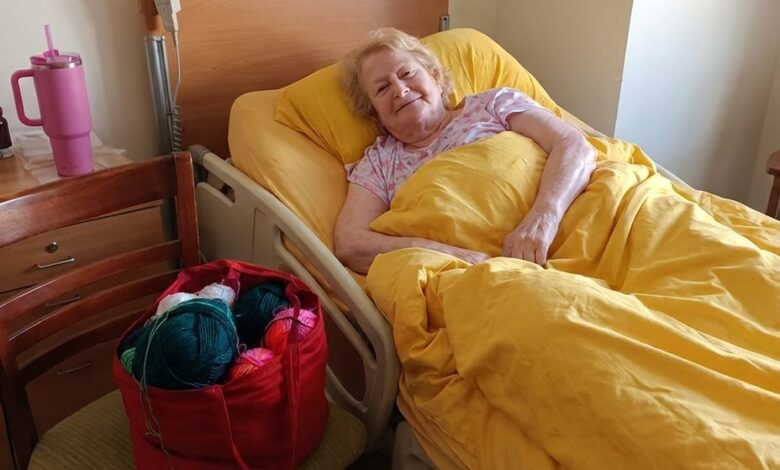
I am forty years old, and the woman I call Mom is not my biological mother.
My real mother died when I was eight years old. Then my father married Linda. Then my father died two years ago. And now it is just me and the woman who showed up at our door when I was eight and never stopped showing up — not once, not for anything, not even when it was hard or inconvenient or thankless. She never tried to take over. She never touched my mother’s things without asking first. She never pushed me to call her Mom — that happened on its own, so slowly and so naturally that I genuinely cannot tell you the exact moment it stopped being a choice and became simply the truth. She packed my lunches and sat through my school plays and stayed up with me when I was sick and held me together after my father’s funeral when I was falling apart at the seams. She became my mother the way weather becomes a season — gradually, completely, and without any single moment you can point to and say, there, that was when it changed. So when her health started slipping two years ago and she needed more than I could give her while working twelve to fourteen hours a day in a city where rent is brutal and I was still carrying debt from my father’s medical bills, I didn’t hesitate. She had given me everything she had for thirty years. The least I could do was give her back some safety.
She was the one who found the facility, actually.
She sat me down at her kitchen table one Sunday with the calm, careful expression she had always used when she was trying to prevent me from panicking before she had finished explaining, and told me she had found a place. Assisted living. Small, she said. Good staff. A garden. Activities. People her own age so she wouldn’t be lonely. She had already toured it without telling me because, as she put it, she didn’t want me talking her out of it before she had all the facts. I remember sitting across from her feeling that particular mixture of love and helplessness that comes with watching someone you adore get older in ways you cannot stop. She told me that years earlier, after her sister died, she had donated part of the estate to help renovate one of the facility’s wings and had served on their advisory board for a time. Because of that, she said, legacy residents like her received a significantly reduced rate. The monthly cost, she told me, would be $2,500. She saw my face and immediately offered to cover some of it herself. I said no before she finished the sentence. You took care of me for thirty years, I told her. I can do this. Her eyes filled with tears and she said I didn’t have to prove anything to her. I know, I told her. I still want to. That part was completely true. What came after it — the part I didn’t find out about for an entire year — was not.
Linda told me the facility handled legacy accounts differently from regular residents.
She explained that the billing office applied her discount internally through her private account, so it would be simpler if I wrote my monthly checks directly to her rather than to the facility, and she would manage her resident balance from her end. It sounded reasonable. It sounded exactly like the kind of mildly annoying administrative arrangement that older institutions sometimes have, the kind of thing that makes no particular sense but exists because nobody has updated the system in twenty years. I asked once, early on, whether I could just pay the facility directly and skip the middleman. She said their system was ancient and strange and she would rather not spend her remaining good years arguing with office staff about account numbers. That sounded so completely and perfectly like Linda that I laughed and let it go. And honestly — part of me didn’t want the details. Details made it real. Details meant she was actually old enough to need this, and I wasn’t ready to sit with that for too long. So for a year, I brought her a check on the same day every month. Same routine every time. I’d show up after work, hand it over, sit with her for an hour, sometimes ninety minutes if I could manage it. Sometimes she’d say stay a little longer. I’d say I can’t tonight but next week, definitely next week. She would look disappointed for half a second and then cover it, the way she had always covered the things she didn’t want to burden me with. I saw it every single time. I still left. I told myself I was doing the responsible thing, the loving thing, and I was — I just didn’t understand yet that responsibility and presence are not the same thing, and that the person sitting in that room every evening after I drove away understood the difference far better than I did.
Last Thursday, a client canceled on me unexpectedly and I arrived at the facility nearly two hours earlier than usual.
I was almost at Linda’s sunroom when I heard her voice through the partially open door, talking to another resident the way she talked when she thought no one who mattered was listening — easy and unguarded and real. I slowed down without meaning to. I heard the other woman say at least your daughter visits, and Linda laugh, and then the laugh fade, and then I heard Linda say something that stopped me completely where I stood. She thinks she’s paying for me to be here, Linda said quietly. It’s the only reason she comes every month without fail. The hallway went very still around me. Not she helps. Not she contributes. She thinks. I stood there with my back against the wall trying to make my brain catch up to what my ears had just taken in, going hot and then cold and then hot again in the way your body does when it has understood something that your mind is still refusing to fully process. A few minutes later Linda came out alone and flinched when she saw me standing there. You’re early, she said. Something in my face made hers change immediately. I said, can we go to your room. She nodded and walked ahead of me without speaking and I followed her down the hallway that smelled like clean linen and something floral and the particular quiet of a place where people are living slowly and carefully. Once we were inside I shut the door and asked her what she had meant. She stared at me. I said I had heard her. Her mouth opened and closed. I asked her directly — am I paying for you to live here or not. She sat down very slowly on the edge of her chair and that terrified me more than if she had immediately denied everything, because Linda had always been many things but she had never been a coward, and watching her sit down like that told me the answer before she said a single word.
Not exactly, she whispered.
I actually laughed. I told her that was an insane phrase. She flinched. I asked her if she owed anything to the facility. She said no. She looked toward the knitting bag sitting in the corner by her chair. Please open it, she said. I went to the bag and dumped it onto the bed without being gentle about it. Yarn spilled out, then needles, then a half-finished scarf, and then folders — bank statements, deposit slips, investment summaries, organized and careful and patient — and finally a sealed envelope with my name written on the front in her handwriting. I stood there looking at the papers spread across her bed and felt the floor shift underneath me. Every check I had written for a year had gone into a separate account she had opened specifically for this purpose. Every dollar tracked. Most of it carefully invested. None of it spent on the facility, which, as she then confirmed, had been housing her for free the entire time because of her legacy donation — the actual arrangement she had told me about at the beginning had been completely true. She had simply left out the part where my money wasn’t going there at all. I held up the papers and asked her what this was. Her voice broke. It was the only way I knew you would keep coming, she said. I just stood there. She kept talking because I think once she started she understood there was no version of stopping that helped her. She told me that after my father died she had given herself every reasonable explanation for the way our visits had slowly gotten shorter and further apart. She knew I was grieving. She knew I was overworked. She knew I loved her. She told herself people get busy. Real life is complicated. It wasn’t personal. But every month it had gotten a little harder to get time with me, and somewhere in the loneliness of that slow accumulation she had done something she knew was wrong — she had constructed a reason for me to show up that didn’t depend on whether I wanted to, because she had become too frightened to find out what would happen if the only reason was wanting to. I wanted you to want to, she said, and those five words landed somewhere in me that I didn’t have a name for and still don’t. She told me she was ashamed of the loneliness. That she hadn’t wanted to beg her daughter for time. I told her not to call me that while tricking me into paying her to prove it. She said you’re right. I ripped open the envelope with my name on it because I was too angry to be careful. It was handwritten in the slightly uneven cursive of her later years, and she said she was sorry, and she said she had never thought of me as her stepdaughter, not once, not ever, and she said she had told herself she was only borrowing my attention and giving the money back later but she knew that didn’t make it honest, and at the bottom of the letter she had written one line twice, as if she had needed to write it once to see whether it was true and then written it again because it was. I didn’t want your money, she had written both times. I wanted your time.
I sat down on the bed beside the scattered papers because my legs stopped working properly.
I told her what she had done was cruel. She said yes. I told her it was selfish. She said yes. I told her it was also genuinely insane, and a tiny broken laugh escaped her before she could stop it, and somehow that one small laugh was the thing that cracked me open rather than keeping me sealed. I asked her if she understood what this had done to me financially, and she said she did now, that she thought she had told herself I was managing better than I was because the alternative was admitting she was hurting me. I read through the statements again. The account balance was slightly higher than what I had paid in — interest, careful investment, patient and organized planning that was so entirely Linda it would have been almost funny if I hadn’t been sitting there with tears running down my face. I looked up at her and asked what she thought happened now. She said she would give it all back, every dollar. I laughed without any humor in it and said wow, great, thanks. She said she knew money didn’t fix it. I said no, it really didn’t. And then I sat there for a moment with all of it around me — the folders and the yarn and the envelope and the woman across from me crying quietly in the way she had always cried, like she was apologizing for the inconvenience of her own feelings — and I understood something that made me angrier and sadder at the same time rather than choosing one or the other. She hadn’t lied to me because she wanted my money. She had lied to me because she was sixty-eight years old and alone and terrified of being loved in leftover pieces — quick calls from parking lots, visits with one eye on the clock, constant promises that she would get more of me soon, when things calmed down, next week for sure — and she had been watching it happen for two years and been too proud and too ashamed to say the simple, true, painful thing, which was that she missed me and she needed more and she was frightened I would stop coming if the reason wasn’t airtight. I finally said, very quietly, you should have just told me you were lonely. She answered just as quietly. I know, she said. What you did was wrong, I told her. She covered her mouth and cried so hard she shook. I know, she said. I’m not over it, I told her. I know, she said. I may be furious for a very long time, I told her. Her mouth trembled. I know, she said again. And then I said the thing that finished her completely. But you do not get to talk like I’m not still your daughter. I moved across the room before I had fully decided to and sat down beside her on the edge of the chair and took her hand. She looked at me like she didn’t deserve it. Maybe she didn’t. I was too tired to sort that out right then. For the record, I told her, you are my real mother. In the ways that matter. We sat there for two hours after that. No envelope. No check. No transaction of any kind. Just me and my mom, which is what she had wanted all along, and which I had been handing out in pieces when she needed it whole. That was five days ago. I don’t think love cancels out betrayal. I don’t think good intentions make a lie acceptable. They don’t. But I think this — she didn’t steal from me because she wanted money. She lied because she was terrified that one day I would stop coming, and she would have to sit with the knowledge that she had seen it happening before I did. I had been loving her in leftovers. She had been starving quietly and waiting for me to notice. I noticed too late. But I noticed. And I am not going to make her wait anymore.