My Father Said I Didn’t Need My Inherited House — Two Weeks Later, He Faced an Unexpected Challenge
Laura Bennett had always believed her grandmother’s lakefront cabin was more than an inheritance. It was the place where love still felt simple, the place where her grandmother Ruth had spent quiet Sundays with her after the rest of the family stopped visiting. When Ruth passed away, she left the cedar cabin overlooking Lake Michigan to Laura, not because it was the most valuable thing she owned, but because Laura had treated it like home long before it became hers. So when Laura received a call from her father saying he had accepted an offer on the property while she was away for work, she could hardly believe what she was hearing. He claimed she did not need the house and that the money was being used for something “important.”
That “important” expense turned out to be a luxury vacation for Laura’s younger sister, Kelsey. Laura quickly realized her father had used a limited repair authorization, signed months earlier, as if it gave him power to sell the property. It did not. Rather than argue with her family, Laura contacted her attorney, Marcus, and sent him the will, deed, authorization papers, and messages proving what had happened. Within two weeks, her parents and sister received a formal letter demanding that the transaction be reversed and the money returned within twenty-four hours. Suddenly, the confident phone calls turned into panic. The title company froze the file, the buyer demanded answers, and the bank flagged the transfer.
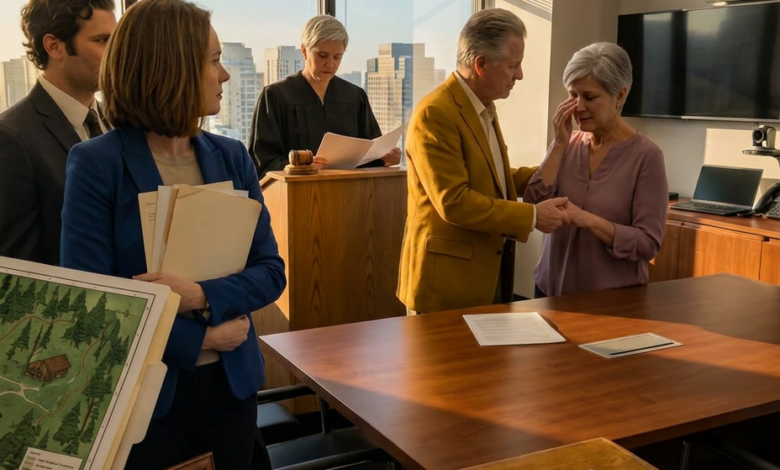
The situation became even more complicated because the buyer, a retired teacher, had believed she was purchasing the cabin honestly. Laura felt sorry for her, but she knew she was not responsible for the lie that had created the problem. At the hearing, Marcus presented the documents clearly: the deed in Laura’s name, her grandmother’s will, the limited authorization, and the trail showing how the deposit money had been used. When the judge asked whether Laura had given written permission to sell the property, her father finally admitted she had not. The court canceled the sale, ordered repayment, and made it clear that being family did not give anyone the right to make decisions about someone else’s inheritance.
Months later, Laura returned to the cabin with a locksmith, a contractor, and a heavy heart. The porch still faced the water, her grandmother’s quilt still rested inside, and the quiet rooms still carried memories of the person who had loved her without conditions. Laura repaired the dock, repainted the shutters, and restored the home on her own terms. She eventually framed the corrected deed in the small back room as a reminder that boundaries can protect what love sometimes fails to honor. Her sister’s vacation lasted only a short time, but Laura regained something far more lasting: her grandmother’s final gift, her peace of mind, and the strength to stop letting family rewrite her life.